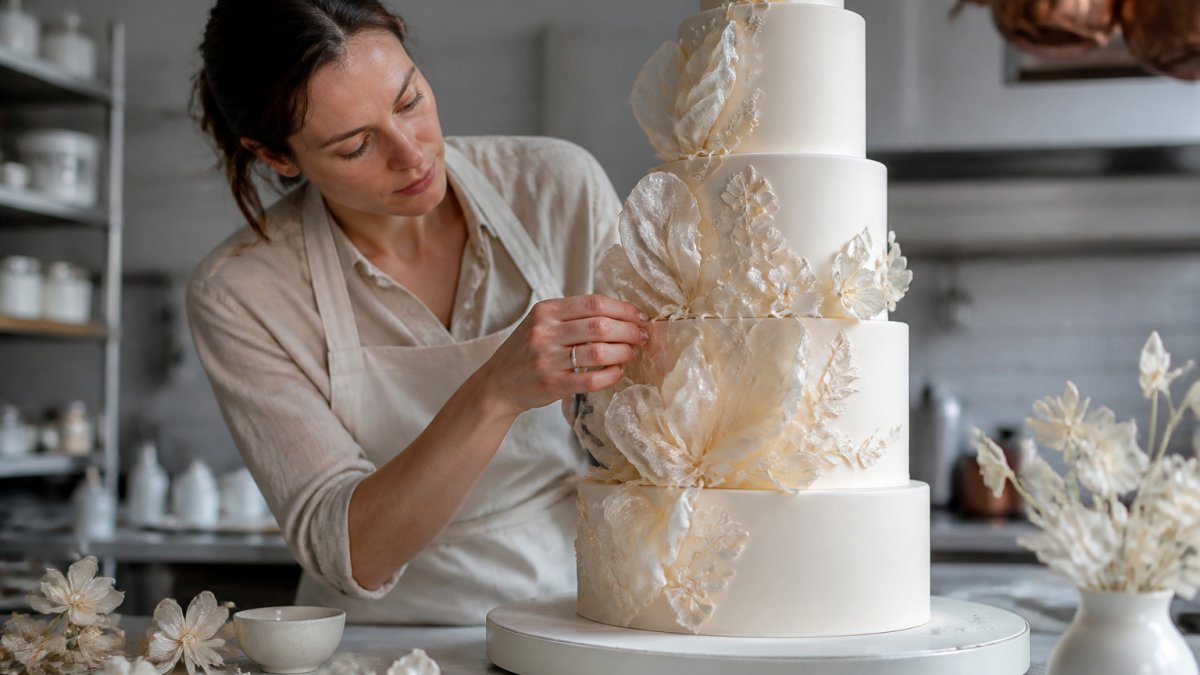
 ultimate-guide
What Makes Luxury Wedding Cakes Expensive: A Complete Guide
Table of Contents
- What Makes Luxury Wedding Cakes Expensive
- The Role of Artisan Skill and Fine-Art Training
- Premium Ingredients and Custom Flavor Profiles
- Structural Engineering and Technical Complexity
- Design, Consultation, and Bespoke Customization
- Average Cost of a Custom Wedding Cake
- How to Choose a Wedding Cake Designer
- Frequently Asked Questions
Last Updated: September 30, 2026
What Makes Luxury Wedding Cakes Expensive
Luxury wedding cakes expensive compared to standard options, they can easily cost thousands of dollars, while a grocery store alternative costs a fraction of that. The gap reflects fundamental differences in design, materials, structural engineering, and customization that transform a dessert into an edible centerpiece.
This guide breaks down the real costs behind luxury wedding cakes and what you're actually paying for when you invest in a premium designer.
The Role of Artisan Skill and Fine-Art Training
The single largest cost driver is the labor of a highly trained cake artist. Fine-art training teaches proportion, composition, color theory, and three-dimensional form, skills that directly translate to creating cakes that function as visual art.
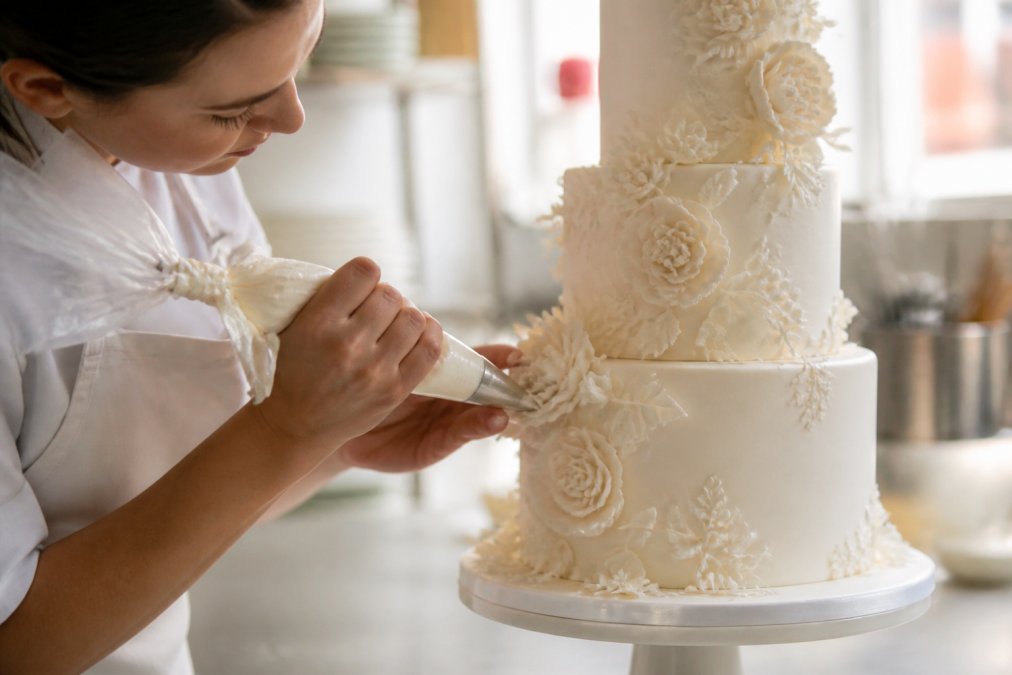
Hand-piping delicate buttercream roses, creating structurally sound sugar flowers, and executing flawless fondant work take years to master. A designer with formal fine-art training commands higher rates because their education is verifiable and their output reflects that investment. The difference is visible in every detail: the way light catches a hand-piped flower, the precision of a ganache finish, the proportion of design elements to cake structure.
This expertise also enables faster execution: what takes an amateur a full day, an experienced artisan completes in hours. You're paying for the knowledge to solve problems on the fly and execute consistently.
Premium Ingredients and Custom Flavor Profiles
Luxury cakes demand premium ingredients: single-origin Madagascar vanilla instead of grocery-store vanilla, high-quality butter, Belgian chocolate, fresh eggs, and specialty flours that dramatically exceed bulk commodity costs.
Custom flavor profiles require sourcing specialty ingredients and testing combinations. A ganache made with 70% single-origin Ecuadorian chocolate costs significantly more than compound chocolate. These choices directly impact both cost and eating experience.
Edible flowers, specialty extracts, infused syrups, and hand-crafted fillings require sourcing and preparation that mass-production cannot accommodate. Luxury studios invest in supplier networks that guarantee quality and consistency, infrastructure with real costs built into pricing.
Structural Engineering and Technical Complexity
Wedding cakes are engineering projects. A five-tier cake standing six feet tall and weighing over 100 pounds requires structural integrity that prevents disaster.
Every tier requires food-grade dowels, straws, or support rods precisely calculated by weight and decoration. A simple two-tier cake might need four dowels per tier; a four-tier cake with extensive hand-piped details can require six to eight dowels per tier, plus additional internal supports.
A designer must account for each tier's weight and determine load-bearing capacity based on cake density, moisture, and frosting type. Buttercream is less stable than fondant under heavy decoration, requiring more aggressive support systems.
Transport and venue conditions add another layer of complexity. A cake that sits in a 72-degree climate-controlled bakery may experience very different structural stress in a 95-degree outdoor summer wedding or a venue with inconsistent temperature control. The designer must engineer the cake to survive temperature fluctuations, vibration during transport, and the physical stress of setup. This is why luxury cake studios often charge delivery and setup fees, the designer or their team must be present to assess the venue conditions, make real-time adjustments, and ensure the cake is structurally sound before guests arrive. These logistical demands often mirror the broader considerations found in luxury wedding pricing, where the venue environment dictates the necessary investment for a seamless event.
Insurance and contingency planning also factor into structural costs. A cake that arrives at the venue leaning or partially collapsed is not just a disappointment, it's a liability. Professional cake designers carry liability insurance and build contingency time into their schedules. Some designers maintain backup support systems or even backup cake components in case structural failure occurs during setup. These safeguards have real costs that are reflected in pricing.
The structural expertise that prevents disaster is what distinguishes a luxury cake designer from a hobbyist. A designer with deep structural knowledge understands not just how to build a cake that looks stunning, but how to build one that actually survives the journey from studio to venue to the moment it's cut and served. This knowledge is built on years of experience, failed experiments, and problem-solving, and it's one of the most underappreciated reasons why luxury cakes cost significantly more than standard orders.
Design, Consultation, and Bespoke Customization
The design process for a luxury wedding cake is not a quick transaction. It typically involves multiple consultations, design iterations, flavor testing, and refinement based on client feedback. A designer meets with the couple, discusses their vision, their wedding aesthetic, their flavor preferences, and their budget. This consultation time is billable labor that reflects the designer's expertise and represents a significant cost component that many couples don't anticipate.
Many luxury cake studios separate the design fee from the cake cost itself. A design consultation fee covers the initial meeting, concept sketches, and design refinement. This fee is often credited toward the final cake cost if the client moves forward, but it ensures that the designer's time is compensated even if a couple decides not to book. This structure protects the designer's labor and reflects the reality that design work is skilled, billable time.
During the consultation phase, the designer is performing multiple tasks that have real costs. They're sketching initial concepts, which may involve creating 3 to 5 different design directions for the client to evaluate. They're discussing structural feasibility, explaining why a certain design element might require additional support or cost more to execute. They're asking detailed questions about the wedding venue, the color palette, the couple's aesthetic preferences, and any dietary restrictions or ingredient allergies. This information-gathering is essential to creating a design that actually works in the real world.
Flavor testing is another hidden cost that's often built into the consultation process. A couple who wants a custom flavor profile, say, a cardamom cake with rose water buttercream and pistachio filling, isn't ordering from a preset menu. The designer must develop the recipe, test it, and potentially make adjustments based on feedback. Some studios include one or two flavor tastings in their consultation fee; others charge separately for additional tastings. A comprehensive tasting session with 4 to 6 different flavor combinations can take 2 to 3 hours of the designer's time, plus the cost of ingredients for testing.
Bespoke customization means that every cake is essentially a one-off creation. Unlike a bakery that produces dozens of identical cakes per week, a luxury studio creates individual works of art. This means no economies of scale, no assembly-line efficiency.
Average Cost of a Custom Wedding Cake
The cost of a custom wedding cake depends on several interconnected factors: the number of guests, the complexity of the design, the quality of ingredients, and the expertise of the designer. A simple two-tier cake with basic buttercream decoration costs substantially less than a five-tier architectural marvel with hand-piped details and custom sugar flowers.
How to Choose a Wedding Cake Designer
Selecting a cake designer is about matching your vision with someone who has both the technical skill and artistic sensibility to execute it. Start by reviewing portfolios carefully. Look for consistency in quality, variety in design style, and evidence of technical mastery. A strong portfolio shows cakes that are structurally sound, beautifully finished, and visually cohesive.
Frequently Asked Questions
What factors contribute to the high price of luxury wedding cakes?
Luxury wedding cakes are expensive due to multiple factors: artisan craftsmanship from trained professionals, premium ingredients like Madagascar vanilla and European butter, complex structural engineering to support multiple tiers, hand-piped sugar flowers and fondant work, bespoke design consultation, and specialized delivery and setup logistics. Each element requires time, expertise, and precision that standard bakery cakes do not demand.
How much should a wedding cake for 100 guests cost?
Pricing depends on design complexity, ingredient quality, portion size, and delivery requirements. A luxury custom wedding cake for 100 guests typically reflects the artisan labor, premium ingredients, and structural supports needed for that guest count. Contact Violet Cake Co for a personalized quote based on your specific vision, flavor preferences, and design complexity.
What is the difference between a standard bakery cake and a couture wedding cake?
A couture wedding cake is a bespoke, handcrafted centerpiece created by a trained artisan, often with fine-art credentials. It features custom flavor profiles, hand-piped decorations, sculptural design elements, and structural integrity engineered specifically for your event. Standard bakery cakes use pre-made designs and mass-production methods, while couture cakes prioritize artisan craftsmanship, edible art, and unforgettable flavor as the primary goals.
How does custom sculptural design impact the cost of a wedding cake?
Custom sculptural design significantly increases cost because it requires the baker to hand-create each element, sugar flowers, fondant sculptures, and decorative details, rather than using templates or pre-made decorations. This labor-intensive process demands specialized equipment, culinary expertise, and artistic vision. Each custom design is unique, requiring consultation time, design iterations, and precision execution that cannot be rushed or standardized.
Why do premium ingredients significantly increase the price of a wedding cake?
Premium ingredients, such as European butter, Madagascar vanilla, high-quality chocolate, and specialty flours, cost substantially more than commodity alternatives. They also require proper handling, storage, and technique to showcase their quality. Luxury cakes use these ingredients to deliver superior flavor and texture, ensuring the cake tastes as extraordinary as it looks. The ingredient cost is passed directly to the final price.
What should I look for when choosing a wedding cake designer?
Evaluate a cake designer's portfolio for artistic quality, design diversity, and alignment with your vision. Check credentials, training, and experience with bespoke designs. Review customer testimonials about both flavor and craftsmanship. Discuss their consultation process, revision policy, delivery logistics, and timeline availability. Ask about their approach to structural integrity and how they handle custom requests. A strong designer will listen to your story and translate it into edible art.
How does delivery and setup impact the total cost of a luxury wedding cake?
Delivery and setup involve specialized logistics: climate-controlled transportation, professional assembly on-site, structural support installation, and insurance for a high-value item. The baker must account for travel time, fuel, equipment, and the expertise required to assemble a delicate, multi-tier cake safely at your venue. These costs reflect the risk and precision needed to protect your investment during transport and final presentation.