 Listicle
Are There Better Alternatives to Extraordinary Desserts?
Last Updated: November 4, 2026
Quick Summary
The best dessert alternatives events hosts use are mini desserts, dessert bars, and plated or shared options, chosen by budget, guest count, and menu variety. Compare all-in totals, including delivery, setup, staffing, and tax, rather than headline food prices. Plan roughly one piece per guest plus a 20 percent buffer.
- Mini desserts such as cupcakes, cake pops, and dessert shooters serve large groups without cutting or plating.
- Compare all-in totals that include delivery, setup, staffing, equipment, tax, and any minimum order.
- Plan one dessert piece per guest plus a buffer of about 20 percent for second helpings.
- Get the arrival window, setup completion time, and an event-day contact in writing before paying a deposit.
- Ask vendors specifically about cross-contact procedures and labeling for dietary restrictions and allergies.
Table of Contents
- Why Hosts Look for an Extraordinary Desserts Alternative for Events
- Mini Desserts and Petite Pastries That Serve Well in Volume
- Dessert Bars, Donut Walls and Mobile Dessert Carts
- Inexpensive Desserts for a Crowd: Per-Guest Cost Comparison
- Simple Dinner Party Desserts to Impress: Plated and Shared Options
- Store-Bought Desserts to Bring to a Party, and Guest-Count Planning
- Booking Your Dessert Plan: Choosing the Right Alternative for Your Event
- Frequently Asked Questions
Why Hosts Look for an Extraordinary Desserts Alternative for Events
Hosts usually start looking for dessert alternatives events for one of three reasons: the budget is tight, the guest count keeps climbing, or the menu needs more variety than a single cake can offer. A traditional display piece is only one way to finish a meal, and it is not always the right one.
Dessert alternatives to traditional cake work well when the goal is to feed a crowd, offer choice, and keep the table visually interesting. The tradeoff is that a mix of formats needs more planning than a single cake. Serving pieces, portion counts, and dietary notes all have to be settled in advance.
This guide covers the main formats hosts consider, how they compare on cost and logistics, and how to decide what fits your event. Where a price or service detail depends on your date, location, or guest list, we point you to the source rather than guess.
Mini Desserts and Petite Pastries That Serve Well in Volume
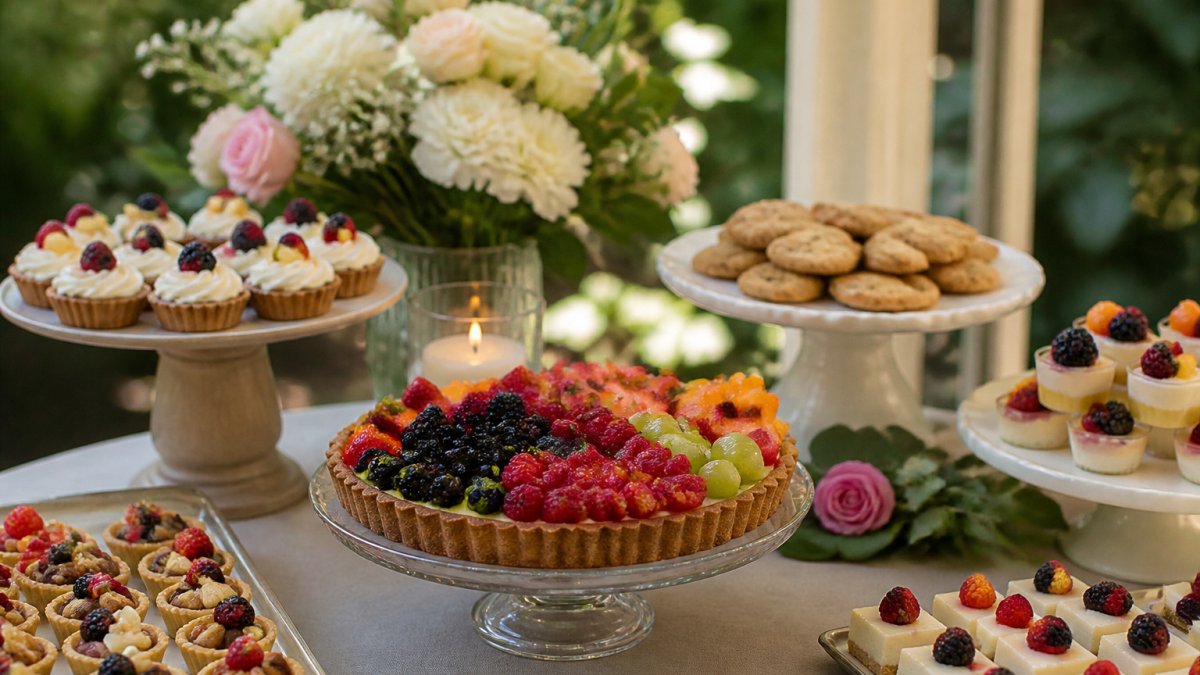
Mini desserts are the easiest of all dessert alternatives events to serve a large group without cutting and plating. Guests take one or two pieces, and nothing needs to be sliced at the table. That makes them a practical fit for cocktail hours and receptions where people move around.

Cupcakes, Cake Pops and Dessert Shooters
Cupcakes remain the most familiar option. Browse the mini, standard, and designed cupcake options and flavors, including gluten-free choices, on the Desserts for Wedding page. They are easy to portion, easy to label by flavor, and easy to adjust for a smaller or larger crowd. Cake pops work well for children's parties and casual events, since they are handheld and need no plate. Dessert shooters suit a plated feel in a single small glass, though they require more hands to assemble and serve.
A common mistake is ordering by guest count alone. Plan for more pieces than the number of guests, because many people take a second treat once the table is set up.
Macarons, Tarts and Other Elegant Confections
Macarons and small tarts bring a refined look that fits formal dinners and upscale receptions. They photograph well and pair with a range of flavors. Their drawback is fragility: they do not travel or hold well in heat, so timing matters for outdoor events.
Choose elegant confections when presentation is the priority and the event is indoors or served close to the time of pickup.
Dessert Bars, Donut Walls and Mobile Dessert Carts
Dessert bars and stations turn dessert into an interactive part of the event. Guests build their own plates, which spreads demand across the evening and reduces the rush at one serving point.
Donut walls and mobile dessert carts are popular for the same reason. They are visual centerpieces, and they give guests a reason to gather. The setup costs more in space and staffing than a static table, and the vendor's delivery window and power or space requirements should be confirmed before booking.
Inexpensive Desserts for a Crowd: Per-Guest Cost Comparison
Cost is where most hosts compare dessert options directly, and it is also where most dessert-alternative articles go quiet. A per-guest figure is only useful if you know what it includes, so build your comparison around three numbers: the food cost per piece, the service cost per event, and the total divided by your actual guest count.
Start with a realistic range by format. Per-guest cost generally depends on whether the format needs on-site labor, display, or setup, so compare each format's total against your own guest count.
A transparent comparison framework looks like this:
- Food cost per piece. Ask for the price per dozen or per 50 pieces, not just a package total. Divide by pieces, then multiply by your planned pieces per guest.
- Delivery and setup. Confirm whether delivery is flat-rate, distance-based, or free above a minimum. Setup fees for bars and walls are separate from food cost.
- Staffing. Interactive stations often require an attendant for a set number of hours. Ask the hourly rate and the minimum shift.
- Equipment rental. Tiered stands, risers, chafing dishes, and carts may be rented or included. Get the line item.
- Minimum order. Many vendors set a dollar or piece minimum that can push a small event into a higher tier.
- Tax and service charge. In most states, prepared food is taxable, and caterers may add a service charge on top. Ask for the all-in total.
Pricing for Violet Cake Co depends on quantity, design, dates, and delivery. For current prices or a quote, visit the Wedding Cake Prices in San Diego page.
Use a simple worksheet to compare options side by side:
- Total guest count, including staff if they will eat
- Pieces per guest, with a buffer for second helpings
- Food cost per piece multiplied by total pieces
- Delivery, setup, staffing, and equipment fees, listed separately
- Tax and service charge
- All-in total divided by guest count
Watch out: a low per-guest food price can double once delivery, setup, staffing, and service charges are added, so compare all-in totals rather than headline rates. Keep setup fees in the comparison and ask each vendor to quote the same guest count and service level so the numbers are actually comparable.
The comparison framework below lists the cost components the article says to compare before choosing a dessert vendor.
| Cost component | What to check | Why it matters |
|---|---|---|
| Food cost per piece | Price per dozen or 50 pieces | Headline rates can hide the true per-piece cost |
| Delivery and setup | Flat-rate, distance-based, or minimum-free | Setup fees are separate from food cost |
| Staffing | Hourly rate and minimum shift | Interactive stations often need an attendant |
| Equipment rental | Tiers, risers, chafing dishes | May be rented or included |
| Minimum order | Dollar or piece minimum | Can push a small event into a higher tier |
| Tax and service charge | State tax and caterer service charge | Can add significantly to the total |
Simple Dinner Party Desserts to Impress: Plated and Shared Options
For a smaller dinner party, a plated or shared dessert often feels more personal than a buffet. Options include a single tart per guest, a shared bowl of fruit with cream, or a small cake cut in the kitchen.
These choices need less equipment and no vendor, which keeps the budget and the logistics simple. The main planning task is timing: plated desserts should be made or finished close to serving.
Store-Bought Desserts to Bring to a Party, and Guest-Count Planning
Bringing a store-bought dessert is the lowest-effort option, and it works well for casual gatherings. Choose items that travel well and can sit at room temperature for the length of the event.
For guest-count planning, a useful rule is one dessert piece per guest plus a buffer of about 20 percent for second helpings. Adjust upward for events where dessert is the main sweet course and downward for events with a long meal before dessert.
Booking Your Dessert Plan: Choosing the Right Alternative for Your Event
Once you have narrowed the format, the booking process decides whether the event runs smoothly. Treat it like hiring any other event vendor: get the scope, the schedule, and the failure terms in writing before you pay a deposit.
Start by matching the format to the event type, then confirm the details that change the total cost. Ask each vendor for a written quote that lists setup, delivery, staffing, equipment, tax, and any minimum order. A quote that only shows food cost is not a quote you can compare.
Use this booking checklist for every dessert vendor you consider:
- Tasting. Ask whether a tasting is included, what it covers, and whether the fee is credited toward the order. Confirm how far in advance tastings are scheduled.
- Minimum order. Get the dollar or piece minimum and whether it applies to food only or the all-in total.
- Lead time. Ask the earliest and latest booking dates for your event date, and whether rush orders carry a surcharge.
- Delivery radius. Confirm the delivery area, the fee beyond it, and the delivery window on the event day.
- Setup and breakdown. Clarify who sets up the display, who breaks it down, and whether the venue requires a certificate of insurance from the vendor.
- Staffing. For bars, walls, and carts, confirm the number of attendants, the hours covered, and the overtime rate.
- Dietary and allergen handling. Ask how vegan, gluten-free, dairy-free, and nut-free items are prepared, whether they share equipment, and how items are labeled and separated on the table.
- Guest-count changes. Get the deadline for final counts and the policy for increases and decreases.
- Cancellation and postponement. Read the refund schedule and whether deposits transfer to a new date.
- Event-day contact. Get a direct phone number for the day of the event and confirm who is responsible if the vendor is delayed.
Dietary accommodations deserve their own conversation. A common pattern is that vendors can handle one or two restricted diets but not a full allergen-free menu. Ask specifically about cross-contact procedures, separate prep surfaces, and dedicated utensils, and ask for labels on every platter so guests can serve themselves safely.
Guest-count planning should be settled before you sign. A useful rule is one dessert piece per guest plus a buffer of about 20 percent for second helpings. Adjust upward when dessert is the main sweet course or the event runs long, and downward when a full meal and cake are also served.
If you are considering a custom dessert from Violet Cake Co, you can start your cake design or contact us to book a consultation.
Watch out: verbal promises about delivery windows and setup times are the most common source of event-day problems, so put the arrival window, setup completion time, and contact name in the contract.
Frequently Asked Questions
What are some good desserts to serve at events?
Mini desserts, dessert bars, donut displays and individually portioned pastries are reliable choices for events. Mini cupcakes, cake pops and dessert shooters are easy to portion and eat standing up. Dessert bars and donut walls give guests variety without requiring plates or utensils. For a sit-down dinner, a single plated dessert works better. Choose based on guest count, service style and whether guests will be mingling or seated.
What is a good dessert alternative to a traditional cake?
Many hosts choose a dessert table, a dessert bar or a set of individual confections instead of one large cake. Donut walls and mobile dessert carts add a visual focal point. Alternatives like these can also be easier to serve, since each guest receives a ready-to-eat portion without cake cutting or plating.
What are easy make-ahead desserts for a crowd?
Desserts that hold their structure at room temperature for a few hours are the most practical make-ahead choices. Cheesecake bars, brownies, cookies, no-bake desserts and tarts can be prepared a day or two in advance and refrigerated. Avoid whipped toppings and delicate fillings if the event lasts several hours outdoors. Label each item with its ingredients so guests with allergies can make safe choices.
How do I plan dessert quantities by guest count?
A common planning approach is one to two mini desserts per guest for a dessert-only reception, and one smaller piece per guest when dessert follows a full meal. Add extra for guests who return for seconds. Vendors that sell by the piece or by the package often list how many items each package includes, which makes budgeting by guest count more straightforward. Confirm portion sizes with any vendor before finalizing your order.