 How-to
How to Transport Tiered Wedding Cakes Safely
Table of Contents
- How to Transport Tiered Wedding Cakes Safely
- Assembled or Separate Tiers: Choosing the Right Transport Method
- How to Transport a 3-Tier Cake Step by Step
- How to Keep a Cake From Sliding in the Car
- Best Cake Carrier for Tiered Cakes
- How to Transport a Wedding Cake in Hot Weather
- Pre-Trip and Arrival Checklist for Your Wedding Cake
- Booking Your Violet Cake Co Delivery for Your Big Day
- Frequently Asked Questions
How to Transport Tiered Wedding Cakes Safely
Last Updated: November 2, 2026
Assembled or Separate Tiers: Choosing the Right Transport Method
The first decision is whether the cake travels fully stacked or as separate tiers that get built at the venue. There is no single right answer, the safest choice depends on five factors: cake height, tier construction, drive distance, road conditions, and available vehicle space. Work through them in order.
Factor 1: Cake height and tier count
A two-tier cake is short enough that assembled transport is usually manageable on a smooth drive. Three tiers is the practical tipping point: the stack is tall enough that a hard stop or a sharp turn can put real leverage on the bottom tier. Four or more tiers, or any design with a topper, tall sugar flowers, or a fragile cascade, should travel as separate tiers unless the drive is very short and the route is verified smooth.
Factor 2: Tier construction and support
Ask your baker one direct question: is this cake built to be moved assembled? If the baker says the cake must be stacked on site, that settles it, do not override the baker's construction plan.
Factor 3: Drive distance and time
As a working rule, assembled transport is reasonable under about 30 minutes of drive time on surface streets. Between 30 and 60 minutes, assembled is still possible but only with a verified smooth route and a second person to spot the cake. Over an hour, or any drive that includes highway speeds, separate-tier transport is the safer default because highway braking and lane changes put repeated lateral force on a tall stack.
Factor 4: Road conditions and route
Potholes, railroad crossings, construction zones, and steep driveways all argue for separate tiers. If you cannot pre-drive the route, assume the worst and transport separately. A route with a long, steep venue driveway is a particular risk for assembled cakes because the cake tilts as the vehicle pitches.
Factor 5: Vehicle space and setup time at the venue
Separate-tier transport requires a flat cargo area large enough for every box plus a level counter at the venue to stack on. Confirm both before choosing this method. Assembled transport requires a vehicle tall enough that the cake box does not rest against the ceiling or a seat back, and a venue setup window of only a few minutes.
Quick decision guide
| Situation | Safer choice |
|---|---|
| 2 tiers, under 30 min, smooth route, level venue access | Assembled |
| 3 tiers, 30-60 min, verified smooth route, second person available | Assembled with spotter |
| 3+ tiers, over 60 min, or any highway driving | Separate tiers |
| 4+ tiers, tall topper, or fragile decoration | Separate tiers |
| Rough roads, steep driveway, or unknown route | Separate tiers |
| No level venue counter available for stacking | Assembled (accept the trade-off) |
The trade-offs in plain terms
Assembled transport saves setup time and preserves the design exactly as the baker finished it, but it concentrates all the risk in the drive. Separate-tier transport spreads the risk across packing and venue assembly, but it demands a level stacking surface, a baker or experienced handler at the venue, and enough time before the reception for the stacked cake to settle. Neither method is risk-free; pick the one whose failure mode you are better prepared to handle. Mastering the mechanics of packing fragile items remains the most effective way to mitigate these hazards regardless of which logistical strategy you ultimately choose.
How to Transport a 3-Tier Cake Step by Step
A three-tier cake needs more planning than a single-tier cake. Each step below protects the tiers from movement and pressure. Work on a clean, flat counter and allow extra time.
- Confirm the stacking plan with your baker before moving anything.
- Place a sturdy cake board under each tier.
- Pack each tier in its own cake box.
- Add dowels or pillars for support if the cake is assembled.
- Secure each box to a nonslip surface in the vehicle.
- Load the cake last and unload it first.
Packing Each Tier in Its Own Box
Each tier should sit in its own sturdy cake box. Do not stack tiers loose in one box. A separate box keeps the frosting from rubbing and stops tiers from sliding into each other during the drive.
Supporting Tiers with Dowels and Pillars
If the cake will travel assembled, it needs internal support.
Check with your baker first, since the right support depends on the cake's size and structure.
How to Keep a Cake From Sliding in the Car
Sliding causes most transport damage. Even a small movement can crack a tier or smear the decoration. Keep the cake still with these steps.
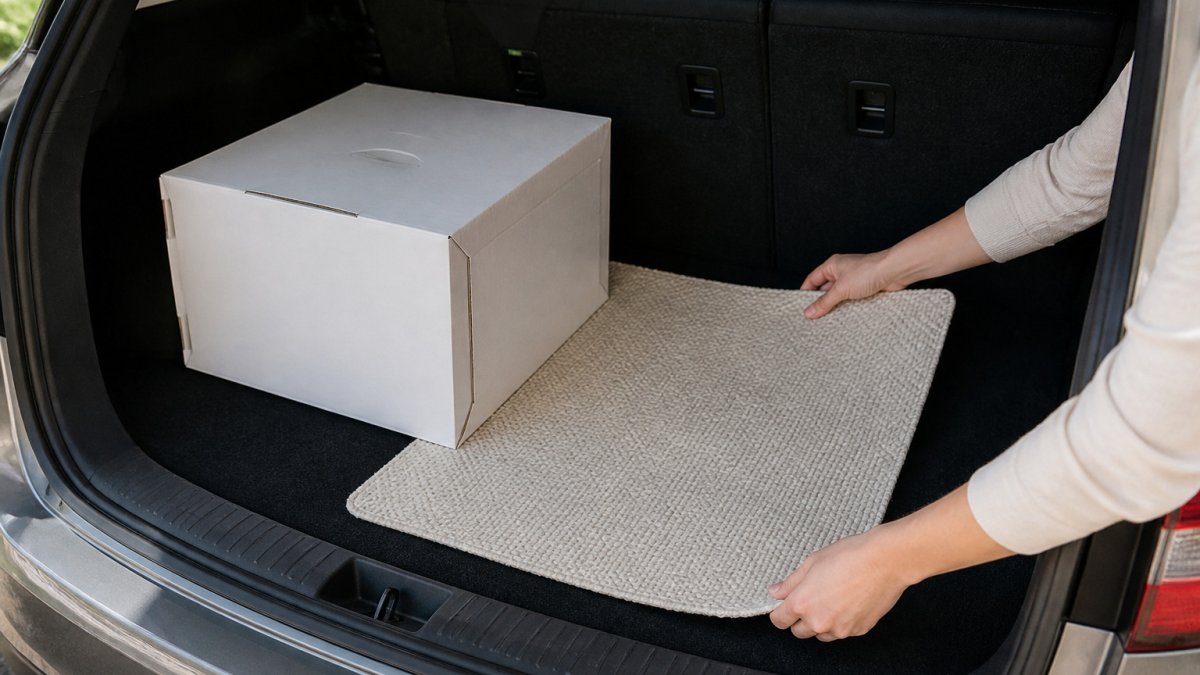
- Place a nonslip mat or shelf liner under the cake box.
- Set the cake on a flat surface in the vehicle, such as the trunk floor.
- Avoid car seats and other sloped spaces.
- Use a wedge or towel to stop the box from moving side to side.
A common mistake is placing the cake on a seat that tilts when the car accelerates. The flat trunk floor is almost always the safest spot.
Best Cake Carrier for Tiered Cakes
A good cake carrier keeps the tiers level and the box secure. Look for a carrier with a firm base, a lid that latches, and enough room for each tier. Insulated carriers help hold temperature, which matters in warm weather.
A carrier that is too large lets the cake slide. A carrier that is too small can crush the decoration.
How to Transport a Wedding Cake in Hot Weather
Heat is the biggest environmental threat to a tiered cake, but the right response depends entirely on what the cake is made of. A blanket 'keep it cool' instruction is not enough, buttercream, fondant, cream cheese frosting, and whipped fillings each fail at different temperatures and need different handling.
Match the plan to the frosting and filling
- American or Swiss buttercream: Softens noticeably above roughly 75°F and can sag or slide above 80°F. This is the most heat-sensitive common frosting and the one that most needs a cooled vehicle and a shaded arrival point.
- Fondant-covered cakes: Fondant itself holds up better in dry heat, but it sweats and becomes tacky in humidity. Fondant also cracks if moved straight from a cold cooler into a warm room, so it needs a gradual transition rather than a sudden temperature swing.
- **
- Whipped cream or fresh-fruit fillings: These are the least stable in heat and the most likely to be flagged by the baker as requiring refrigeration. If the cake has these, ask the baker whether assembled transport is viable at all in warm weather.
- Ganache and dark-chocolate finishes: More heat-tolerant than buttercream but prone to blooming (a dull, streaky surface) if chilled and then warmed quickly.
Practical heat plan for the drive
- Pre-cool the vehicle for at least 15 minutes before loading, with the air conditioning on its coldest setting and the rear vents directed at the cargo area.
- Transport in the coolest window of the day, early morning is almost always better than midday, and it also buys setup time at the venue.
- Keep the cake out of direct sun. A cake box on a rear seat in direct sunlight can be 15-20°F warmer inside than the cabin air. Use window shades or a covered cargo area.
- Use an insulated carrier or cooler bag for drives over about 30 minutes, but do not seal a cake in an airtight cooler with ice packs pressed against the box, condensation and direct cold contact damage frosting.
- Never leave the cake in a parked car. Cabin temperatures can climb past 100°F within minutes on a warm day, which will ruin buttercream and is unsafe for cream cheese or whipped fillings.
Refrigeration: when it helps and when it hurts
Ask the baker whether the specific design tolerates refrigeration before the event.
Arrival in hot weather
Unload the cake first and move it directly to the coolest available indoor spot, not a sunlit lobby or a tent without climate control. Confirm with the venue in advance that there is a cool, level staging area.
Pre-Trip and Arrival Checklist for Your Wedding Cake
Use this checklist before you leave and when you arrive.
- Confirm the stacking plan and transport method
- Check that each tier has a sturdy board
- Verify that dowels or pillars are in place
- Place a nonslip mat in the vehicle
- Clear a flat, stable surface in the trunk
- Check the weather and plan for heat if needed
- Load the cake last and secure it
- On arrival, unload the cake first and set it on a level surface
Booking Your Violet Cake Co Delivery for Your Big Day
Transporting a tiered wedding cake takes planning, and the stress is easier to manage when your baker understands the logistics. Pricing depends on the cake's size, design, and delivery details, so visit the Violet Cake Co website for current prices or a quote. [START YOUR CAKE DESIGN]
Frequently Asked Questions
How do you carry a three-tier cake?
Carry a three-tier cake with two people, one supporting the base and one steadying the top, keeping the cake level at all times. Transport each tier in its own sturdy box on a flat, nonslip surface in the vehicle, ideally the trunk floor rather than a car seat. Take turns with corners and turns slowly, and avoid stairs or uneven pavement when possible. Ask your venue or coordinator about a cart or dolly for the final approach. Plan to have the cake assembled on site if the distance and terrain make transport risky.
Should a tiered wedding cake be transported assembled or in separate tiers?
For most trips, transporting tiers separately is the safer choice, because each tier can be boxed, secured to its own board, and placed flat in the vehicle. Assembled transport is faster on site but puts the full height and weight at risk during every bump and turn. Shorter trips on smooth roads with a fully supported, dowelled cake may work for some designs. Consider the cake's weight, the distance, the route, and the weather before deciding.
Should you wrap a cake in plastic wrap or foil for transport?
Keep the cake in its box rather than wrapping it tightly in plastic wrap or foil, which can smear decorations and trap moisture. A snug box with a cake board underneath protects the cake better than wrapping alone. Delicate details should be protected from contact with the box lid. Ask your baker about the best protection for your specific finish before delivery day.
What happens if the cake is damaged during transport?
Ask your baker in advance about what to do if something goes wrong, since details vary by order. Pricing for delivery depends on quantity, dates, and delivery distance; check Violet Cake Co's website for current pricing or request a quote.