 blog
Are Fine Art Inspired Birthday Cakes Worth It?
Last Updated: October 30, 2026
Quick Summary
Fine art inspired birthday cakes are worth it because they turn dessert into the centerpiece of the room, giving guests a focal point they photograph before anyone cuts it. They work best when the design follows one clear artistic movement with a restrained palette and deliberate texture.
- Impressionism suits soft buttercream with loose strokes and blended color, and it hides small flaws well.
- Minimalism is the hardest style to fake because every flaw shows, so the finish must be flawless.
- A palette knife cake photographs best from a distance because ridges catch light and cast shadows.
- Ask your designer to name the specific artwork or artist behind the design before you commit.
- Tell your designer about allergies before the design is locked, and confirm ingredients in writing.
Table of Contents
- Why Fine Art Inspired Birthday Cakes Change the Whole Party
- What Makes an Art Themed Birthday Cake Work
- Watercolor Cake Design: Soft Washes and Color Bleeds
- Palette Knife Cake: Texture You Can See From Across the Room
- Sculptural Birthday Cake: When the Cake Becomes the Artwork
- Palettes, Paint Tubes, and Fondant Toppers: Artist's Tools in Sugar
- How to Brief a Cake Designer on Your Art Vision
- Start Your Cake Design With Violet Cake Co
- Frequently Asked Questions
Why Fine Art Inspired Birthday Cakes Change the Whole Party
Fine art inspired birthday cakes turn a dessert into the centerpiece of the room. At Violet Cake Co, we build them the way a painter builds a canvas: with a clear idea, a chosen palette, and deliberate detail.
That is the real value. The cake is not just sweet. It sets the tone.
The difference shows up the moment the cake hits the table. For a closer look, browse artistic birthday cakes for adults to picture the idea.
What Makes an Art Themed Birthday Cake Work
An art themed birthday cake works when the design follows a real artistic idea instead of piling on decorations. The strongest cakes pick one direction and commit to it fully. Color, texture, and shape all serve that single idea.
Three things separate a strong cake from a busy one:
- One clear concept. A single movement or motif, not five.
- A restrained palette. Two to four colors that talk to each other.
- Texture with intent. Every swipe and edge is placed on purpose.
Get those right and the cake reads as art. Miss them and it reads as clutter.
Choosing a Movement: Impressionism, Pop Art, or Minimalism
The movement you choose decides everything else: color, texture, and how much detail the cake can carry.
Impressionism suits soft buttercream work. Loose strokes, blended color, and a sense of light.
Pop Art wants bold contrast. Primary colors, thick outlines, and graphic shapes.
Minimalism is the hardest to fake. One sculptural form, a narrow palette, and almost no decoration.
Two more movements are worth knowing because they translate unusually well to cake:
Abstract Expressionism. Think of the poured and dripped paint of Jackson Pollock. On a cake, thinned colored cocoa butter or tinted white chocolate is dripped and flicked across a fondant base, then allowed to set. Difficulty: low to moderate, because the style is meant to look accidental. It is the most forgiving way to get a genuinely fine-art look.
Still Life. A composition of fruit, flowers, or vessels arranged on a surface.
Pick the movement that matches your guest list and your comfort with drama.
Cake Sizing and Servings for an Art Party
Sizing is where art cakes get tricky. A tall sculptural design can look enormous and still serve fewer guests than expected, because sculpted tiers hide less cake than they appear to.
Plan your servings before you plan the design. Learn how to choose the right amount of wedding cake servings with tips on guest count, slice size, and dessert options. A two-tier cake feeds a smaller crowd than most hosts assume.
Each movement brings its own visual rules, difficulty level, and best-fit occasion.
| Movement | Key visual rules | Difficulty |
|---|---|---|
| Impressionism | Loose strokes, blended color, sense of light | Moderate |
| Pop Art | Primary colors, thick outlines, graphic shapes | Moderate to high |
| Minimalism | One sculptural form, narrow palette, little decoration | High |
| Abstract Expressionism | Dripped and flicked paint, accidental look | Low to moderate |
| Still Life | Arrangement of fruit, flowers, or vessels | Moderate to high |
Watercolor Cake Design: Soft Washes and Color Bleeds
Watercolor cake design uses thinned buttercream or hand-painted color to create soft washes and gentle color bleeds across the surface. Achieving this ethereal aesthetic requires a delicate touch that mirrors the intentionality found in original watercolor art, a medium that invites a deeper exploration of how artistic authenticity translates from canvas to confection.
The technique rewards restraint. Two or three colors, applied in thin layers, blend better than a full rainbow. Let each wash dry slightly before adding the next. That is how you get depth without mud.
A common mistake is overworking the surface. The more you touch a watercolor finish, the flatter it looks. Stop early.
This style suits a painting birthday cake for adults and older kids alike. It reads as sophisticated without being cold.
Palette Knife Cake: Texture You Can See From Across the Room
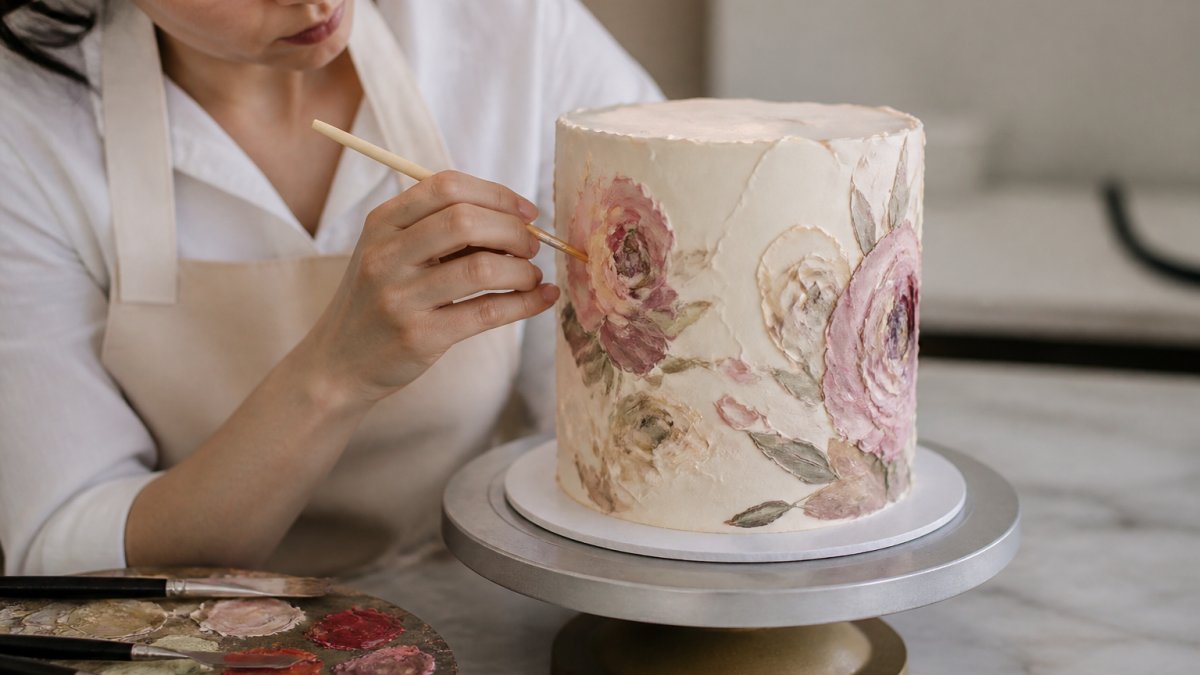
A palette knife cake is built with a flat metal tool instead of a piping bag. The decorator loads the knife with buttercream and presses it against the cake in thick, deliberate swipes.
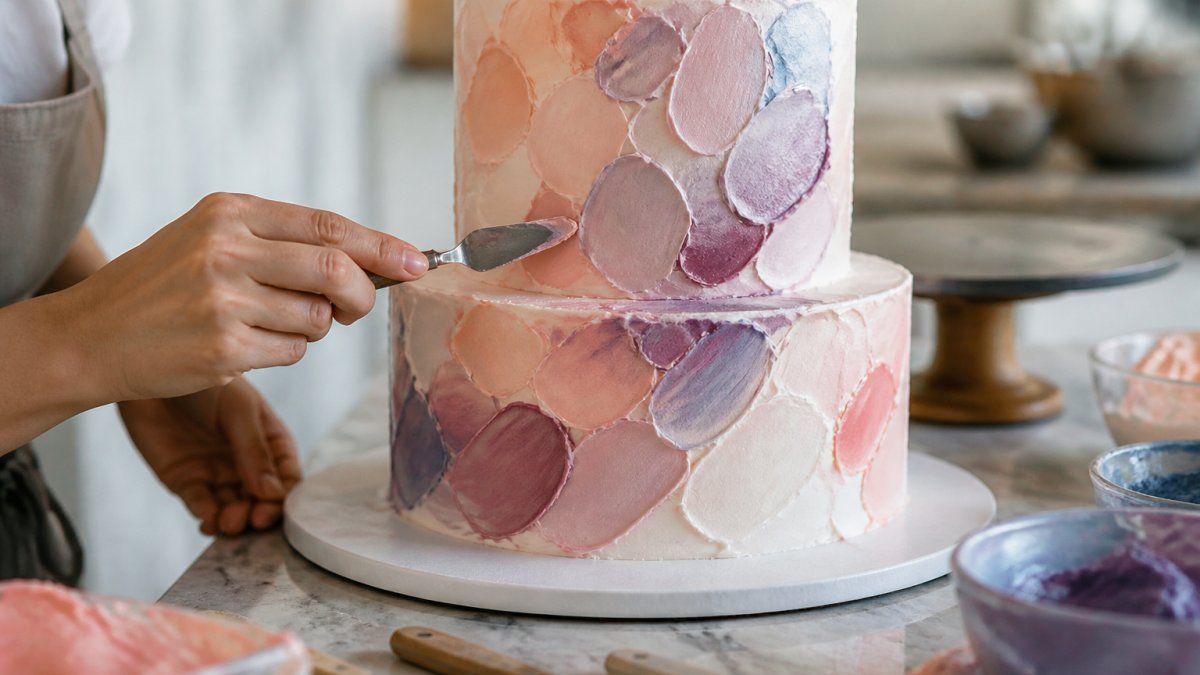
This is the finish that photographs best from a distance. The ridges catch light and cast small shadows, so the cake looks dimensional even across a large room.
It also hides small imperfections well. A palette knife finish is meant to look hand-worked, so tiny variations read as character rather than error.
Sculptural Birthday Cake: When the Cake Becomes the Artwork
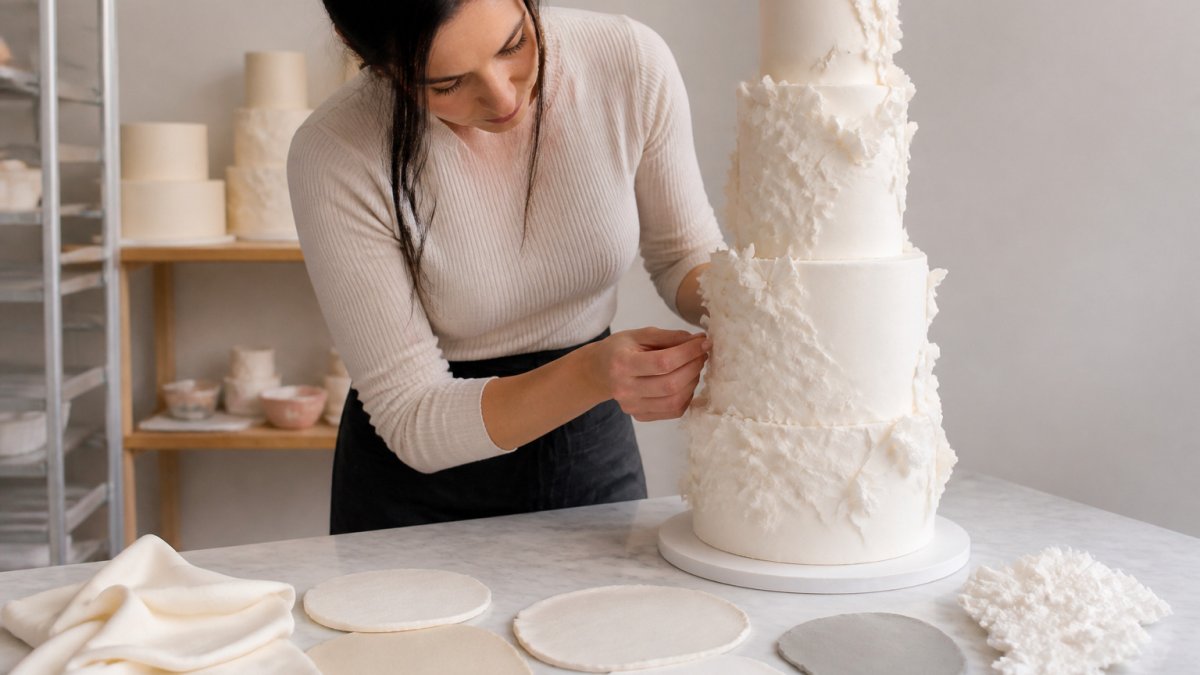
A sculptural birthday cake stops pretending to be a cake. It becomes a form: a folded shape, a carved object, a piece of architecture you happen to eat.
This is the most demanding category and the one with the highest payoff. Reviewing fine art cake design portfolio examples helps before committing to a sculptural design.
Where it falls short: sculptural cakes are less forgiving of last-minute changes. Once the structure is set, the design is set.
Palettes, Paint Tubes, and Fondant Toppers: Artist's Tools in Sugar
The artist's toolkit translates neatly into sugar. These are the details that make an art-themed cake instantly readable.
- Paint palettes: a round fondant disc with dabs of colored icing, often the cake topper. Best for Impressionist and still-life designs. Difficulty: low. Cut the disc from firm fondant at least 24 hours ahead so it holds a flat edge, then pipe small rounds of tinted buttercream into the wells.
- Paint tubes: small fondant cylinders with labels, clustered at the base. Best for Pop Art and playful adult cakes. Difficulty: moderate, because the cylinders need to stand upright without sagging; insert a toothpick or a short piece of dry spaghetti through the center for support.
- Paintbrushes: modeling chocolate handles with fondant bristles. Best for Impressionist and still-life designs. Difficulty: moderate. Model the handle around a toothpick so the brush can be inserted into the cake rather than balanced on top.
- Palette knife toppers: a mini sugar knife laid across the top tier. Best for Abstract Expressionist and Minimalist cakes. Difficulty: low. A flat fondant blade with a thin modeling-chocolate handle reads clearly at a distance.
- Fondant toppers: hand-cut letters, splatters, and easel shapes. Best for Pop Art and personalized designs. Difficulty: low to moderate, depending on how fine the lettering is.
Match the material to the movement you chose. For a still-life cake, sugar fruit and piped flowers often do more work than any tool topper, because the composition itself signals the theme.
These small pieces do a lot of work. They tell guests the theme before anyone explains it.
Allergens and Alternative Ingredients
Art cakes are built to be looked at, but they still have to be safe to eat. Tell your designer about allergies before the design is locked, not after.
If a guest has allergies, ask about the ingredients and any shared equipment before ordering.
How to Brief a Cake Designer on Your Art Vision
A clear brief gets you a cake that matches the picture in your head. Vague briefs get vague cakes.
Bring these to the consultation:
- Reference images. Artwork, color swatches, even a fabric sample.
- The movement or mood. Impressionist, Pop Art, minimal, sculptural.
- Guest count and serving plan.
- Venue and lighting. Warm dim light flatters soft finishes; bright light rewards crisp edges.
- Your hard limits. Budget, allergens, delivery timing.
Then ask the questions that matter:
- Can I see examples close to my idea?
- What happens if the sketch is not what I pictured?
- How does delivery and setup work at my venue?
- What is the lead time for a design this detailed?
A designer with a fine-art background will usually sketch before baking. That sketch is your chance to course-correct. Ask for revisions at that stage, not on the day of the party.
Our founder, Malissa, is a graduate of USC's Roski School of Fine Art. Read more about Violet Cake Co's wedding cake designer and her fine-art background before briefing her.
Start Your Cake Design With Violet Cake Co
The hardest part of a fine art inspired birthday cake is not the baking.
We do that part for a living. Violet Cake Co brings fine-art training, hand-crafted sugar florals, and flavor-first recipes to every commission.
Let us design a custom birthday or event cake for your next celebration. Tell us the theme, the guest count, and the date, and we will take it from there.
Get started with Violet Cake Co and give your party a centerpiece people remember.
Frequently Asked Questions
How do you make a birthday cake look like a painting?
Most painted-looking cakes are built with buttercream rather than flat fondant. Decorators pipe soft bands of color, then blend them with a palette knife or offset spatula while the icing is still tacky, which creates the streaky washes and visible brushwork you would see on canvas. Hand-painted details on top of a smooth base, plus edible color dust for depth, finish the effect. The technique takes practice, so ask your designer for photos of watercolor or palette knife work they have actually delivered.
What colors work well for an art themed birthday cake?
Three to five colors usually reads better than a full rainbow. Pick a dominant hue, one supporting color, and a neutral like white, cream, or charcoal to let the brights stand out. Watercolor designs suit soft blues, blush, and sage; palette knife work handles deeper tones like teal, ochre, and burgundy well. For a pop art look, keep it to bold primaries with black outlines. Tell your designer the party's palette so the cake sits inside the room instead of fighting it.
Can a birthday cake be designed to look like a sculpture?
Yes, and it is one of the fastest-growing requests for milestone birthdays. Sculptural cakes use carved tiers, asymmetric stacking, and shaped fondant or sugar elements to create form rather than a flat decorated surface. Because structure affects stability, expect a designer to ask about delivery distance, venue temperature, and how long the cake will sit out. Simple geometric shapes travel better than tall, thin forms. Share reference images of sculpture or architecture you like, not just cakes.
What should I tell a cake designer when ordering a fine art inspired cake?
Bring the guest count, the date, the venue, and any dietary needs first, then the creative brief. Name two or three artworks, movements, or color stories you respond to and one or two you dislike, since knowing what to avoid is as useful as knowing what you love. Ask how many revisions are included and when the final design is locked. For fine art cakes, also ask whether the finish is buttercream or fondant, because that choice affects both the look and the flavor.
A great cake starts with a clear idea and a designer who can build it. If you are ready to turn your art vision into a cake, reach out to Violet Cake Co for a consultation. We will walk you through the design, the sizing, and the timeline so nothing is left to chance.