 blog
Floral Wedding Cake Trends 2026: 7 Botanical Looks
Table of Contents
- Why Floral Wedding Cakes Dominate 2026
- Floral Wedding Cake Ideas: From Romantic to Sculptural
- Sugar Flower Wedding Cake: The Art of Edible Botanicals
- Modern Wedding Cake Designs: Texture, Color, and Form
- Wedding Cake Flavors 2026: Floral Infusions and Fruit Garnish
- Planning Your Floral Cake: Budget, Timeline, and Logistics
- Conclusion: Bringing Your Floral Cake Vision to Life
- Frequently Asked Questions
Last Updated: October 12, 2026
Why Floral Wedding Cakes Dominate 2026
Floral inspired wedding cake trends in 2026 put botanicals at the center of the table.
A floral wedding cake is a tiered or single-tier cake decorated with flowers, greenery, or botanical elements made from sugar, fresh blooms, wafer paper, or buttercream.
The reason is simple. Flowers carry meaning that fondant figures and monograms can't. A cascade of garden roses says something personal.
Below, we break down the seven botanical looks defining 2026, plus the safety, budget, and logistics details most trend lists skip.
Floral Wedding Cake Ideas: From Romantic to Sculptural
The best floral wedding cake ideas in 2026 fall into two camps: soft and romantic, or bold and sculptural. Both work. The choice comes down to your venue, your palette, and how much drama you want.
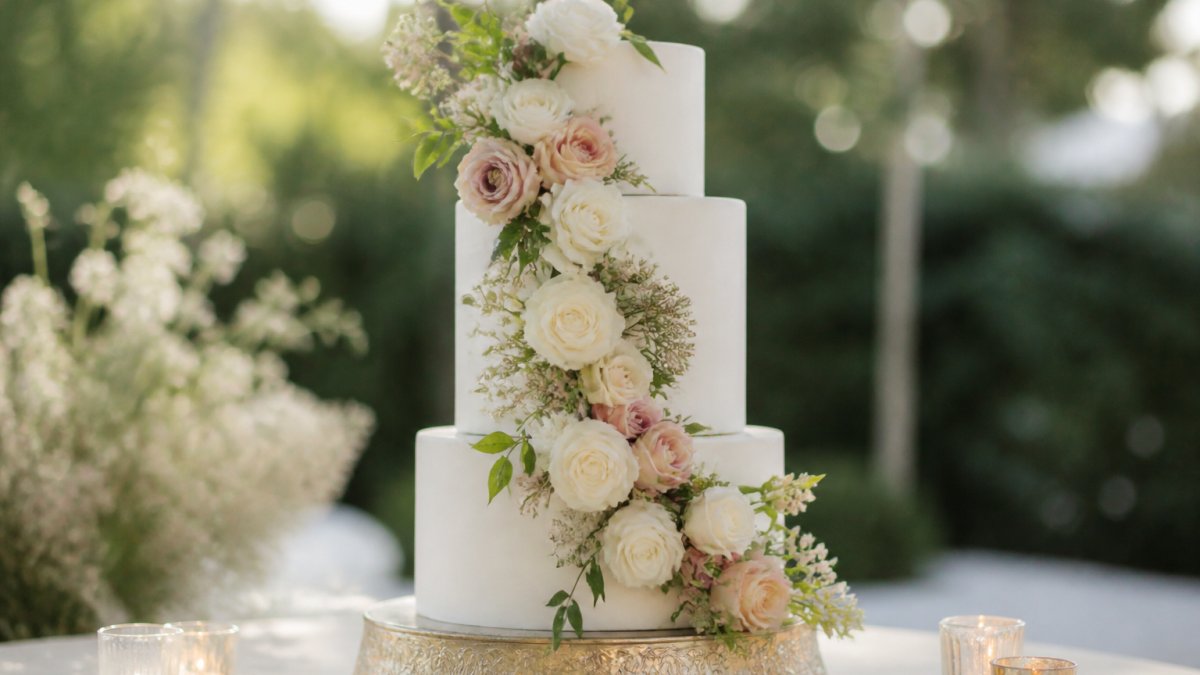
Romantic cascades and garden-inspired tiers
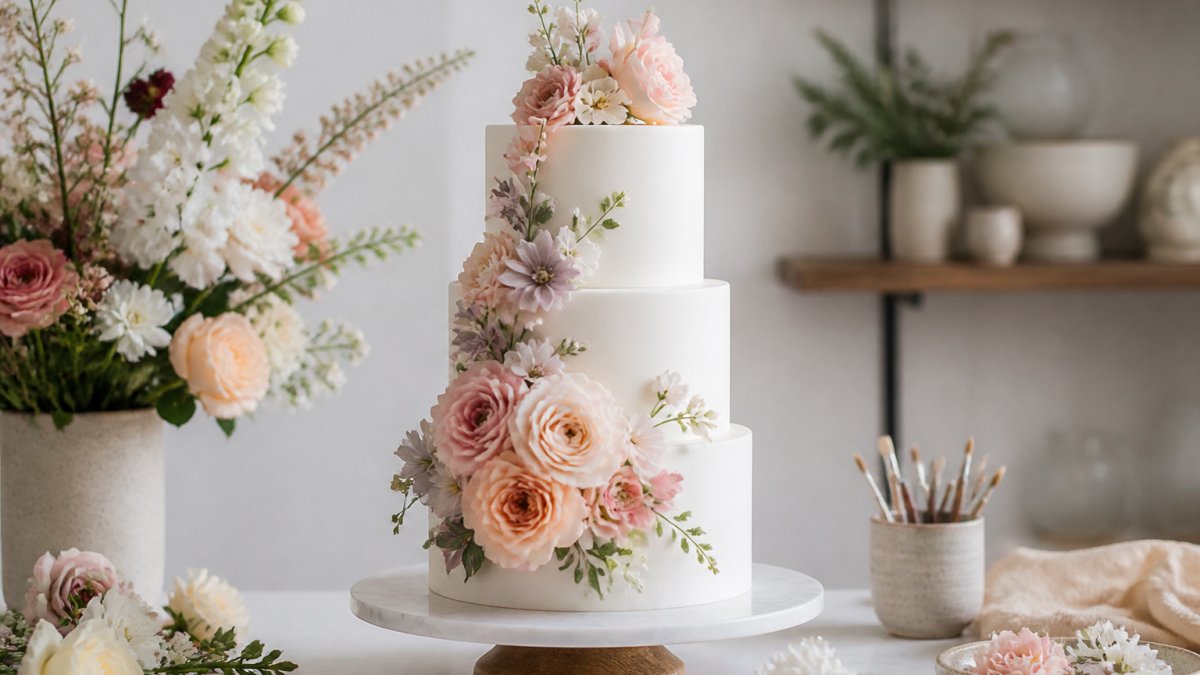
Cascading blooms tumble down one side of the cake, mimicking how flowers grow. Garden roses, ranunculus, and trailing vines work well. The look suits outdoor weddings and venues with natural light.
For a garden-inspired tier, we place small blooms and leaves between tiers rather than on top. It reads as if the cake grew from the garden itself.
Asymmetrical and oversized floral statements
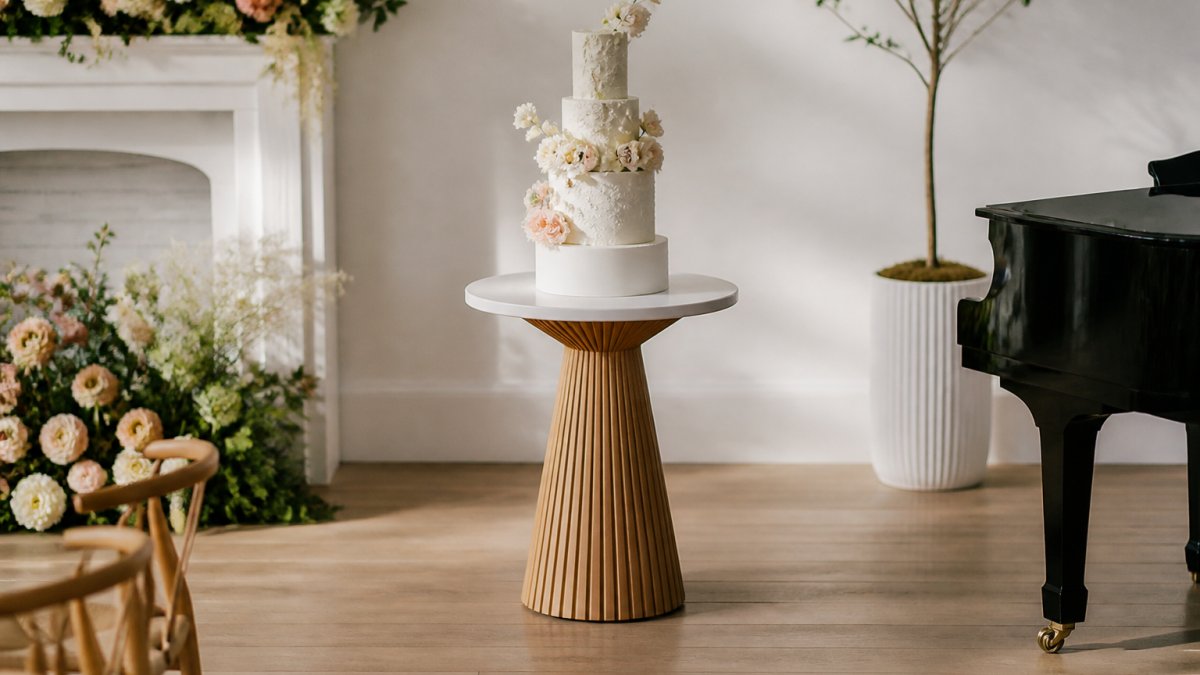
Asymmetrical tiers break the traditional stacked look. One tier shifts slightly, or a single oversized bloom anchors the design on one side.
Oversized flowers make the biggest impact on smaller cakes. A two-tier cake with one large sculpted bloom reads as modern art, not dessert.
Sugar Flower Wedding Cake: The Art of Edible Botanicals
A sugar flower wedding cake uses hand-crafted blooms made from sugar paste, gum paste, or fondant. These flowers are fully edible and can be made weeks ahead, which makes them the safest and most flexible choice for most weddings.
Fresh, sugar, wafer-paper, and pressed flowers compared
Each floral material has trade-offs. The table below compares them on the factors that actually drive the decision: appearance, durability, food safety, lead time, relative cost, and where each one works best.
| Material | Appearance | Durability | Food Safe | Lead Time | Relative Cost | Best For |
|---|---|---|---|---|---|---|
| Sugar flowers | Sculptural, matte-to-satin finish, highly detailed | Holds shape for weeks; tolerates heat and humidity | Yes, fully edible | 2-4 weeks ahead | Highest, priced per bloom by complexity | Humid or warm venues, keepsake displays, cakes that travel |
| Fresh flowers | Natural, soft, slightly irregular | Wilts within hours; sensitive to heat and cold | Only if non-toxic and food-safe grown | Day-of only | Moderate, varies by bloom and season | Outdoor weddings, instant impact, photos taken early |
| Wafer-paper florals | Translucent, paper-thin, delicate | Fragile; can soften in high humidity | Yes, edible | 1-2 weeks ahead | Moderate | Airy, minimalist designs, ruffled petals |
| Pressed flowers | Flat, vintage, botanical-print look | Stable once sealed; can crack if handled | Yes, if food-grade | 1-2 weeks ahead | Lowest | Nostalgic, vintage decor, flat panel designs |
A few practical notes that don't fit in a table:
- Sugar flowers are priced per bloom, and complexity drives the number. A simple five-petal rose costs far less than a ruffled peony with wired petals. Most bakers quote sugar florals as a line item separate from the cake itself.
- Fresh flowers are the cheapest per stem but the most expensive in risk. They must be wired or wrapped before insertion, kept cool until setup, and removed before slicing.
- Wafer paper is the budget-friendly middle ground, but it does not like humidity. In a damp venue it can go limp or sticky.
- Pressed flowers are the most affordable and the most fragile. They work best on a flat buttercream panel, not on curved tiers.
If your venue is warm, humid, or more than an hour from the bakery, sugar or wafer-paper florals are usually the safer bet. If your priority is a natural, just-picked look and your ceremony is outdoors in mild weather, fresh blooms deliver an impact no edible material fully matches.
Food safety and flower selection
Not every flower belongs on a cake. Some are toxic. Others carry pesticides meant for gardens, not plates.
- Safe options: roses, orchids, pansies, violets, nasturtiums, and marigolds
- Avoid: lily of the valley, oleander, foxglove, and hydrangea
- Always confirm the grower uses food-safe practices
The FDA guidance on edible flowers notes that flowers grown for ornamental use may be treated with pesticides not approved for food. Ask your florist directly, and keep stems out of the cake itself.
Modern Wedding Cake Designs: Texture, Color, and Form
Modern wedding cake designs in 2026 lean on texture and restraint. The flowers do the talking. The cake surface stays quiet, or it echoes the blooms with subtle movement.
Textured buttercream and stone-inspired finishes
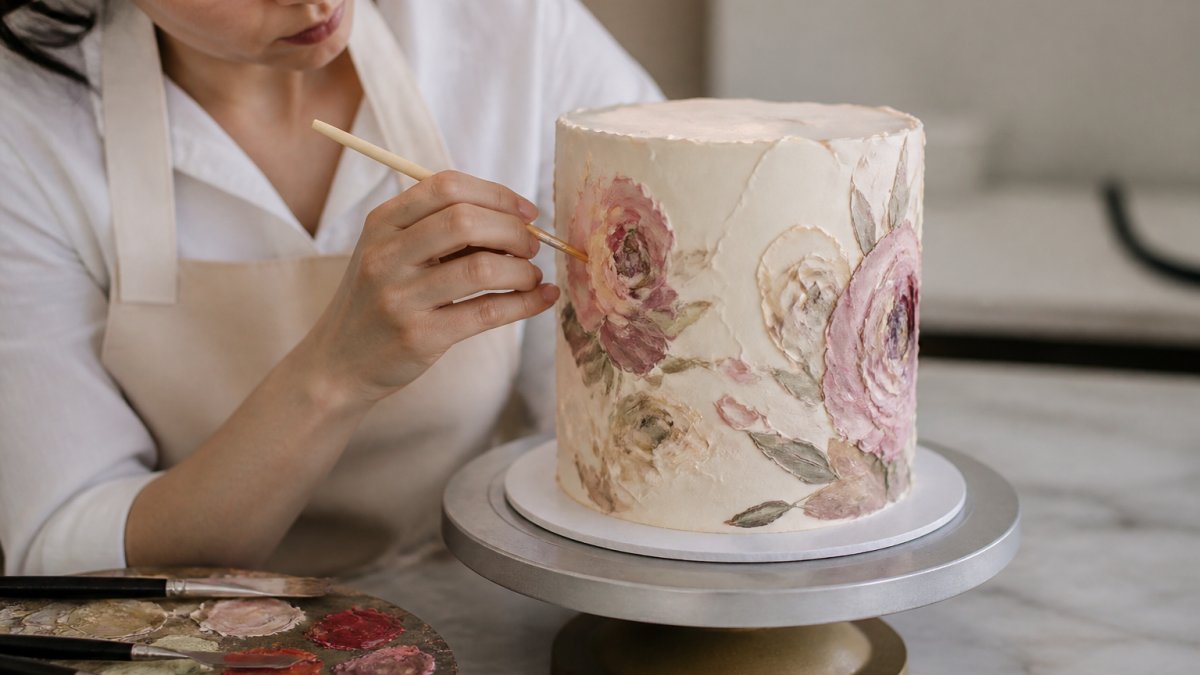
Textured buttercream mimics plaster, linen, or stone. The finish adds depth without competing with the florals. A stone-inspired finish pairs especially well with earthy tones and sculptural blooms.
We often use a palette knife to build ridges that catch light. It photographs beautifully and hides small imperfections that smooth finishes expose.
Color palettes: earthy tones, sage green, ivory, and burgundy
The 2026 palette favors muted, grounded colors. Sage green, ivory, olive green, and burgundy lead the list.
- Sage green and ivory: soft, romantic, garden-inspired
- Olive green and burgundy: moody, dramatic, autumn-friendly
- Earthy tones with cream: boho weddings and outdoor venues
Pick two dominant colors and one accent. Three is plenty. More than that and the design starts to fight itself.
Wedding Cake Flavors 2026: Floral Infusions and Fruit Garnish
Wedding cake flavors in 2026 move toward floral infusions and fresh fruit. Lavender, rose, elderflower, and hibiscus show up in buttercreams and fillings. Fruit garnish, like cascading grapes, figs, and candied citrus, ties the flavor to the design.
Seasonal and locally available blooms for flavor
Seasonal blooms taste better and cost less. Spring brings lavender and rose. Summer offers elderflower and hibiscus. Fall favors fig and citrus.
Ask your baker what's in season near your wedding date. A locally sourced bloom often outperforms an imported one on both flavor and freshness. The USDA seasonal produce guide is a useful starting point for timing.
Planning Your Floral Cake: Budget, Timeline, and Logistics
Planning a floral cake comes down to three things: budget, timeline, and logistics. Get these right and the design process stays calm. Get them wrong and even a beautiful cake becomes stressful.
What drives the price of a floral cake
Floral cake pricing is not a single number. It is a stack of decisions, and each one moves the total. The biggest drivers are:
- Tier count and servings. Each additional tier adds cake, filling, labor, and structural support. A three-tier cake serves far more guests than a two-tier, but it also costs meaningfully more to build and deliver.
- Floral material. Sugar flowers are priced per bloom and are the most labor-intensive option. Fresh flowers cost less per stem but add wiring, refrigeration, and setup labor. Wafer paper and pressed flowers sit in the middle to low end.
- Floral density. A single statement bloom is far cheaper than a full cascade. Density, not size, is usually the cost multiplier.
- Design complexity. Asymmetrical tiers, sculpted textures, and hand-painted finishes add design hours.
Because these variables stack, the most useful thing you can do early is ask your baker for a per-bloom or per-tier range rather than a single quote. That lets you adjust density or tier count without redesigning the whole cake.
Climate, transport, and venue constraints
Heat, humidity, and distance all affect a floral cake. Sugar flowers handle heat better than fresh blooms. A cake traveling more than an hour needs refrigeration and a stable base.
A few constraints worth confirming before you finalize a design:
- Temperature and humidity. Buttercream softens in heat. Fresh flowers wilt. Wafer paper can go limp in humidity. If your venue is warm or damp, lean toward sugar florals and a firmer frosting.
- Refrigeration. Some venues have limited or no refrigeration. Ask early, and plan the delivery window around it.
- Delivery distance and road time. A cake that sits in a warm vehicle for an hour is a different risk than one delivered across town.
- Venue rules. Some venues restrict open flames, which rules out certain candle-and-floral setups. Others limit when vendors can access the room.
- Setup access. Stairs, narrow doorways, and elevators all affect how a tiered cake is assembled on site.
Ordering timeline for a custom floral cake
- 6-9 months out: Book your baker and lock the date
- 3-4 months out: Finalize design direction and palette
- 6-8 weeks out: Confirm flower choices and flavors
- 2-3 weeks out: Final headcount and tier count
- 1 week out: Confirm delivery time and venue access
Sugar flowers need the longest runway because they are made in batches and need time to dry and set. Fresh flowers are ordered close to the date so they arrive at peak freshness. Wafer paper and pressed flowers fall in between.
Pricing depends on tier count, floral complexity, delivery distance, and design time. See Violet Cake Co's pricing page for current rates and a quote.
Conclusion: Bringing Your Floral Cake Vision to Life
Choosing a floral cake means balancing beauty with safety, budget, and logistics. The details matter more than the trend list. Get the flowers right, plan the timeline, and the design takes care of itself.
At Violet Cake Co, we build every cake around your story. Hand-crafted sugar florals and flavor-first recipes make sure it tastes as good as it looks. Start your cake design and let's build something unforgettable.
Frequently Asked Questions
Are floral wedding cakes still in style for 2026?
Yes, floral wedding cakes remain a top trend for 2026, with a shift toward more artistic, sculptural designs. Couples are moving away from traditional piped flowers and choosing handcrafted sugar flowers, fresh blooms, or a mix of both. Earthy color palettes, textured buttercream, and asymmetrical tiers are also popular. A floral-inspired cake can be timeless or modern depending on the flower selection and arrangement.
Are sugar flowers or fresh flowers better for a wedding cake?
Both have advantages. Sugar flowers are durable, can be made weeks in advance, and are safe to eat if made with edible ingredients. Fresh flowers add natural beauty and fragrance but require careful selection to avoid toxic varieties and must be kept cool. Many couples choose a combination: fresh flowers for impact and sugar flowers for detail. Discuss options with your baker to match your venue and climate.
How do you match a wedding cake to your floral arrangements?
Share your florist's mood board or photos with your cake designer. They can replicate specific blooms in sugar, echo the color palette, or mirror the arrangement's shape. For a cohesive look, consider using the same flower varieties or complementary textures. If your florist is using locally grown seasonal blooms, your baker can suggest similar sugar flowers that will hold up on the cake.
How far in advance should you order a custom floral wedding cake?
For a custom floral wedding cake, book your baker at least 3-6 months before the wedding. Peak wedding season (May-October) fills up quickly, so earlier is better. If your wedding is in 4 months, some designers can accommodate, but expect limited availability.