 How-to
How to Ensure Wedding Cake Tastes Good: 7 Steps
Table of Contents
- Start With a Tasting Strategy
- Wedding Cake Tasting Tips: How to Evaluate Flavor and Texture
- How to Choose Wedding Cake Flavors That Work Together
- Wedding Cake Tasting Questions to Ask Your Baker
- Balance Flavors Across Tiers and Guest Preferences
- Wedding Cake Delivery and Storage: Protect the Taste
- Troubleshoot Dry, Bland, or Overly Sweet Cake
- Conclusion
- Frequently Asked Questions
Last Updated: October 18, 2026
Start With a Tasting Strategy
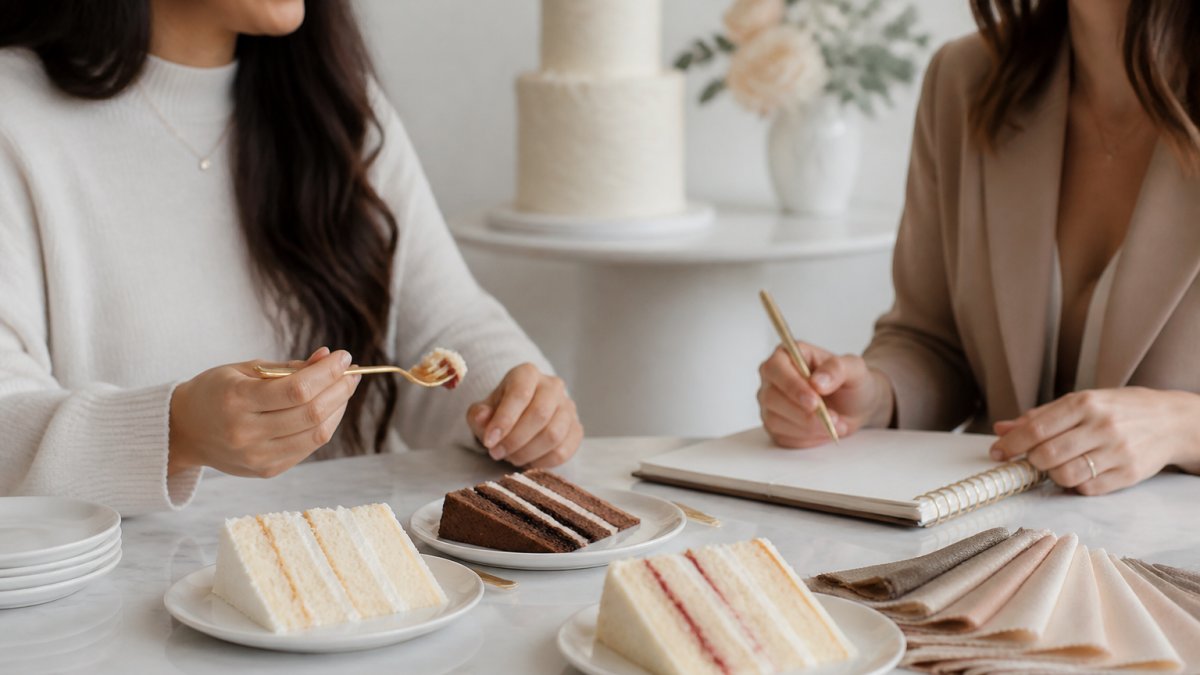
The best way to ensure your wedding cake tastes good is to treat the tasting as a structured test, not a fun afternoon of free dessert.
Most couples book a baker on looks and hope the flavor follows.
A quick definition first: wedding cake tasting is the structured sampling of cake flavors, fillings, and frostings before you commit to a design and a baker. It is a test of texture and sweetness, not just a flavor menu.
USDA Food Safety and Inspection Service guidance on food handling is a useful reference for the storage and serving questions you will ask later.
Wedding Cake Tasting Tips: How to Evaluate Flavor and Texture
Evaluate cake texture first, then sweetness, then flavor.
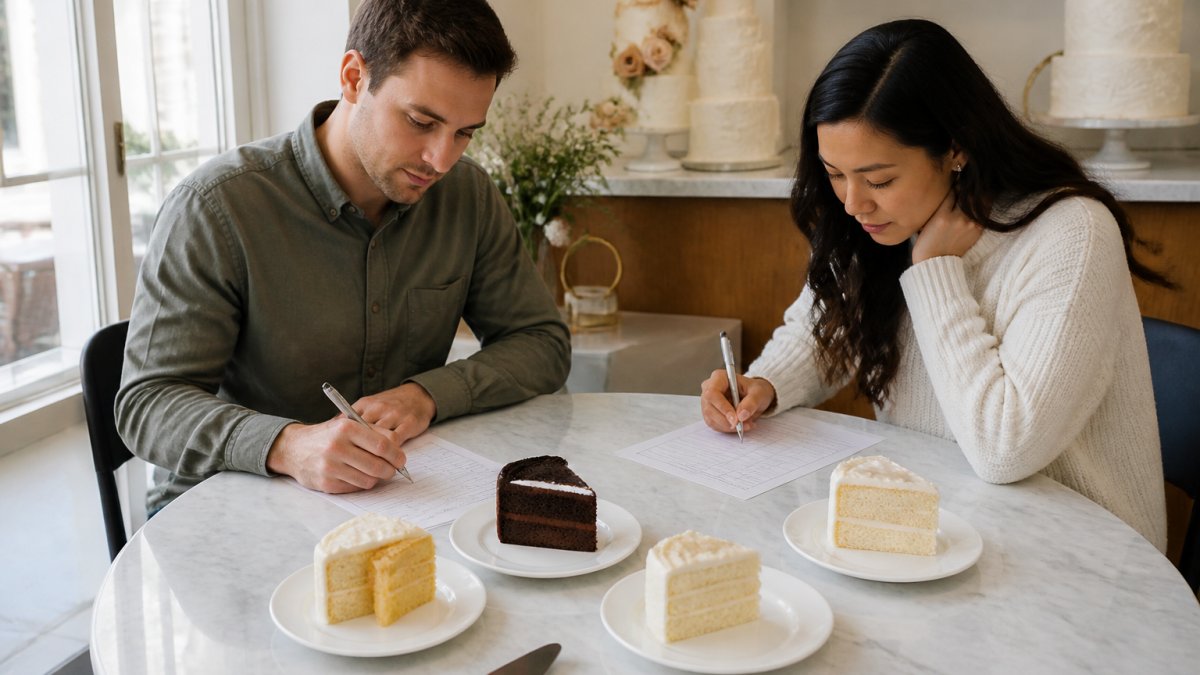
Most couples taste six to eight samples and then try to remember which was which. That does not work: palate fatigue sets in after the third or fourth bite, and by the end every buttercream tastes the same.
Build a Tasting Scorecard Before You Arrive
Print one scorecard per sample and bring a pen. Score each attribute from 1 to 5, where 1 is a fail and 5 is excellent, and save overall preference for the end of the session.
| Attribute | What a 5 Looks Like | What a 1 Looks Like |
|---|---|---|
| Crumb texture | Tender, even, moist but not wet | Dry, crumbly, gummy, or heavy |
| Sweetness balance | Cake and frosting in proportion | Frosting overwhelms or cake tastes flat |
| Flavor clarity | You can name the flavor without reading the label | Bland, artificial, or muddled |
| Filling | Adds contrast in texture and acidity | Slippery, grainy, or cloying |
| Frosting | Smooth, buttery, not greasy | Gritty, waxy, or leaves a film |
| Finish | Clean, pleasant aftertaste | Lingering sugar or grease coat |
| Overall preference | You would order a second slice | You would push the plate away |
Weight the attributes: texture and flavor clarity should carry more than sweetness, because sweetness is the easiest thing for a baker to adjust. A cake scoring 5 on texture and flavor but 3 on sweetness beats one scoring 4 across the board with no standout attribute.
Run the Tasting in a Fixed Order
Use these wedding cake tasting tips to keep your palate sharp and your notes comparable:
- Taste plain cake first, before frosting, to judge the crumb on its own.
- Scrape a little frosting aside and taste the cake layer alone.
- Take small bites and pause between samples.
- Sip water or eat a plain cracker between flavors.
- Score each sample before you taste the next one.
- Ask for the same flavor twice to check consistency.
- Taste light flavors before dark ones; vanilla before chocolate, fruit before spice.
- Save the richest sample for last so it does not coat your palate for everything after.
Compare Samples Side by Side, Not From Memory
At the end of the session, lay the scorecards out and rank them. Look for the highest combined texture and flavor-clarity score, not the in-the-moment favorite, that is often the sweetest sample, and sweetness fades fastest when cake is served after a meal.
Ask the baker to bake one sample as a cupcake the same day and one from a refrigerated overnight batch, then taste both.
A scorecard turns a pleasant afternoon into a decision you can defend, and it gives your baker specific feedback, "the crumb was a 5 but the filling was a 2", far more useful than "we liked the second one."
How to Choose Wedding Cake Flavors That Work Together
Choose flavors that contrast in texture and sweetness, not flavors that repeat each other.
When you learn how to choose wedding cake flavors, think in pairs:
- Rich plus bright: chocolate cake, raspberry filling
- Soft plus crisp: vanilla cake, toasted nut filling
- Sweet plus tangy: cream cheese frosting, citrus curd
- Warm plus fresh: spice cake, pear or apple filling
Avoid stacking three sweet elements in one tier, a sweet cake, filling, and frosting taste flat after the third bite. Guests remember balance, not sugar.
Ingredient quality matters too: fresh butter, real vanilla, and good cake flour give a cleaner flavor than shortcuts.
FDA guidance on food allergens and labeling is worth reading if any guest has a food allergy.
Wedding Cake Tasting Questions to Ask Your Baker
Ask about baking timelines, ingredient sourcing, and how the cake holds up after delivery. These wedding cake tasting questions separate a baker who plans from one who wings it.
Bring this list to your tasting:
- When is the cake baked relative to the wedding date?
- Which flavors hold up best overnight and during transport?
- How do you keep the cake from drying out before serving?
- Can you adjust sweetness if a flavor tastes too heavy?
- How do you handle dietary needs or allergies?
- What is your process if a flavor does not work at the tasting?
That last question matters. A good baker welcomes a revision before the wedding day. Our consultation and design process includes flavor adjustments, so couples are never stuck with a sample they did not love.
Balance Flavors Across Tiers and Guest Preferences
Balance flavors across tiers so every guest finds something they like. A three-tier cake can carry three different flavors, and that solves most guest-preference problems in one centerpiece.
Plan the tiers like this:
- Bottom tier: the crowd-pleaser, like vanilla or chocolate
- Middle tier: a brighter or fruit-forward flavor
- Top tier: your signature flavor, the one that tells your story
Match the cake to your theme and decor too: a floral, garden-style wedding pairs well with light, fresh flavors, while a rich, moody design can carry deeper flavors like chocolate or spice.
Dietary needs deserve a real plan. If guests avoid gluten, dairy, or nuts, ask which flavors can be made safe and how the kitchen prevents cross-contact.
Wedding Cake Delivery and Storage: Protect the Taste
Protect the taste by controlling temperature and time from the bakery to the plate. Wedding cake delivery and storage decisions affect flavor as much as the recipe does. A perfect cake handled badly tastes average.
Buttercream and cake crumb both change with temperature. Cold cake tastes firmer, less sweet, and duller because aroma compounds release more slowly when cold, so a cake served straight from the refrigerator can taste like a different cake than the one you approved.
Serving Temperature and Timing
Plan the timeline backward from the cake cutting:
- Delivery and setup: the cake arrives at the venue and is assembled on site, ideally two to four hours before the reception begins.
- Refrigeration: if the cake holds perishable fillings such as cream, custard, or fresh fruit, keep it refrigerated until roughly one to two hours before cutting. Confirm the exact window with your baker, because the safe holding time depends on the filling.
- Tempering: move the cake to the display table one to two hours before cutting so the buttercream softens and the flavor opens up. In a warm room, shorten this window; in a cold room, extend it slightly.
- Cutting: cut and serve within the reception window your caterer has planned. Do not let a cut cake sit out for hours.
A common pattern is a cake that tastes flat because it was pulled from the refrigerator minutes before cutting. The fix: build the tempering window into the venue timeline and tell catering when to move the cake.
Handling Rules That Protect Texture
Follow these handling rules from bakery to plate:
- Keep the cake cool and out of direct sun during transport.
- Refrigerate the cake if it holds perishable fillings, then let it come closer to room temperature before serving.
- Wrap cut surfaces tightly in plastic wrap if the cake is stored overnight.
- Freeze portions only if you plan to thaw them slowly in the refrigerator, never on the counter.
- Level and support each tier so the cake stays firm during assembly and transport.
- Keep the display table away from heat lamps, direct sun, and drafty doors.
- Ask the venue whether the display area is air-conditioned during setup hours.
Display Conditions Change Flavor
A cake displayed in a warm room for four hours will soften, and a buttercream that was smooth at the tasting can start to slump; a cold draft can dry the cut edges.
Ask your baker how they deliver and set up the cake at the venue.
For food-safety basics on cooling and holding, USDA FoodSafety.gov storage charts is a solid reference.
Troubleshoot Dry, Bland, or Overly Sweet Cake
Fix the problem at the tasting, not at the reception. Dry, bland, or overly sweet cake almost always traces back to one of a few causes, each with a clear fix.
| Problem | Likely Cause | The Fix |
|---|---|---|
| Dry, crumbly cake | Overbaking or too little fat | Ask for a moister recipe or a soak |
| Bland flavor | Weak extracts or too little seasoning | Request a stronger, real ingredient |
| Overly sweet | Frosting outweighs the cake | Swap to a lighter buttercream or fruit filling |
| Greasy mouthfeel | Heavy shortening-based icing | Choose a butter-based frosting |
| Stale taste | Baked too far ahead | Confirm a fresh bake close to the date |
A baker who can explain these fixes understands their craft; one who cannot is guessing. If a sample tastes off, say so and ask for a second try, this is exactly why you taste before you book.
Conclusion
The gap between a beautiful cake and a delicious one comes down to process: a real tasting, honest questions, balanced flavors, and careful handling on the day. Get those right and your cake tastes as good as it looks.
If you want a baker who treats flavor as seriously as design, Violet Cake Co brings fine-art training, hand-crafted sugar florals, and flavor-first recipes to every bespoke cake. Our consultation and design process keeps you involved from first sample to final tier.
Frequently Asked Questions
How far in advance should you taste wedding cake flavors?
Schedule your tasting 6 to 9 months before the wedding date, especially if you are booking a custom baker during peak season. This gives you time to compare flavors, ask wedding cake tasting questions, and adjust the design without rushing. If your wedding is in 4 months or less, ask whether the baker can accommodate a condensed timeline. Bring your venue details and guest count so the baker can advise on delivery and quantity.
How many wedding cake flavors should you choose?
Two or three flavors work well for most weddings: one crowd-pleasing base, one fruit or citrus option, and one richer chocolate or caramel tier. For a smaller guest list, a single standout flavor can feel more intentional. If you are planning dietary-friendly options, add a separate allergen-safe tier or cupcakes. Use the tasting to compare flavor combinations and decide which tiers will be cut first, so the most popular flavors reach the most guests.
How should a wedding cake be stored before serving?
Keep the cake refrigerated until 1 to 2 hours before cutting, then let it sit at room temperature so the buttercream softens and the flavor opens up. Transport it in a sturdy box on a flat surface, and avoid direct sun or heat. Ask your baker for specific wedding cake delivery and storage instructions, including whether the cake should stay boxed and how long it can sit out. Proper storage protects both texture and taste.
What do professional bakers use to keep cakes moist?
Bakers use simple syrup brushed onto each cake layer, oil-based frostings, and careful wrapping before refrigeration to lock in moisture. Ingredient quality and freshness matter too: fresh butter, quality chocolate, and properly measured cake flour make a tender crumb. Ask your baker how they keep cakes moist and how they handle assembly and transport. A cake that is baked, filled, and stored well will taste better on the wedding day than one that is only decorated well.