 blog
Modern Floral Wedding Cake Designs for 2026
Table of Contents
- What Makes a Wedding Cake Design Truly Modern
- Floral Wedding Cake Ideas That Capture Contemporary Elegance
- Wedding Cakes with Fresh Flowers vs. Sugar Florals
- Color Palettes and Seasonal Bloom Selection
- One-Tier Wedding Cakes with Modern Floral Impact
- Design Logistics: Fresh Flowers, Delivery, and Timing
- Flavor Meets Artistry: The Complete Design Process
- Frequently Asked Questions
Last Updated: October 13, 2026
What Makes a Wedding Cake Design Truly Modern
Modern floral wedding cake designs blend artistic vision with clean execution, stripping away heavy fondant and ornate details in favor of intentional florals, sculptural shapes, and flavors that matter.
The key difference between modern and traditional floral cakes is restraint. Traditional designs layer on flowers until they cover every surface; modern designs use flowers strategically, letting the cake's shape and color story breathe.
Floral Wedding Cake Ideas That Capture Contemporary Elegance
The best floral wedding cake ideas balance botanical beauty with architectural clarity by committing to one direction: cascading movement, minimalist restraint, or sculptural drama. Picking one approach prevents the cake from feeling confused.
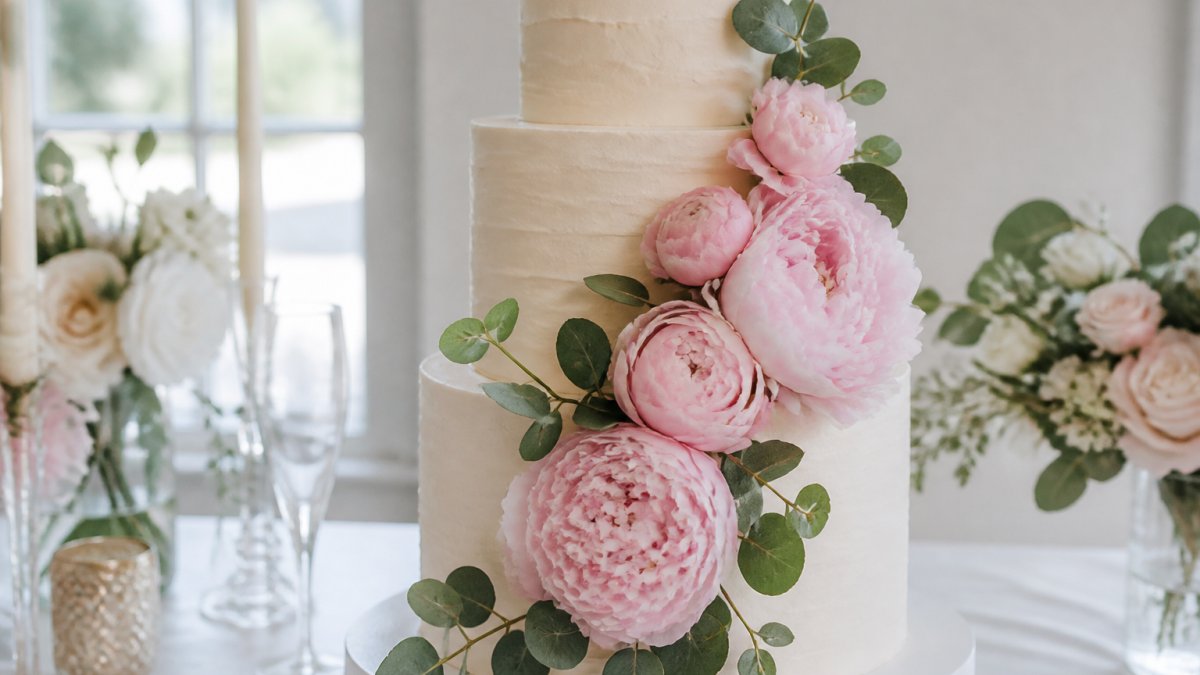
Cascading Blooms and Botanical Movement
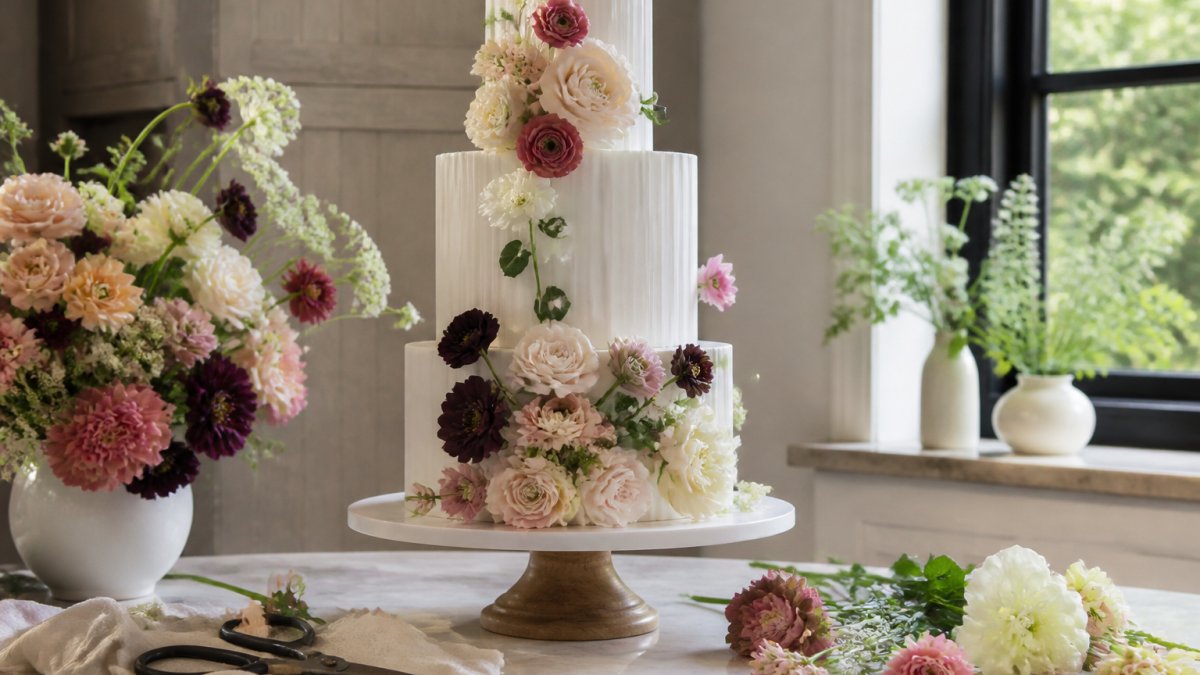
Cascading floral arrangements create visual momentum, with flowers flowing down one or more tiers from the top toward the base.
Cascading blooms work best when you choose flowers with weight and structure. Peonies, garden roses, and ranunculus hold their shape.
Fresh flowers for cascades require timing: the florist or baker adds them hours before service, not days ahead, keeping petals firm and colors true.
Minimalist Florals with Negative Space
Minimalist designs use fewer flowers placed with intention. A single stem of white ranunculus on a two-tier cake. Three garden roses on a round cake.
This approach demands precision. Every flower must earn its place. The buttercream finish matters more because it's visible.
Minimalist florals suit couples who value simplicity and modern aesthetics. They photograph cleanly. They feel sophisticated without trying too hard.
Sculptural Arrangements and Dimensional Design
Sculptural cakes treat florals as three-dimensional art. Flowers don't sit flat on the frosting.
Sculptural designs often feature hand-crafted sugar flowers because they're more durable and can be positioned precisely at any angle, sitting for hours without wilting.
These cakes work as statement pieces and conversation starters, photographing dramatically from multiple angles.
Wedding Cakes with Fresh Flowers vs. Sugar Florals
Choosing between fresh flowers and sugar flowers shapes your entire design and timeline. Each approach has real advantages and real constraints.
Fresh Flowers: Visual Impact and Food Safety
Food safety matters here. Not all flowers are safe to eat. Many ornamental flowers are treated with pesticides.
The safest approach: use a florist who specializes in wedding flowers and understands food safety. They source pesticide-free stems.
Fresh flowers require timing precision: add them 2-4 hours before service.
Fresh flowers work best for same-day events or climate-controlled conditions; outdoor heat, direct sun, and humidity stress fresh blooms quickly.
Sugar Flower Wedding Cake Designs for Longevity
Sugar flowers last. You can assemble a sugar flower wedding cake design days ahead.
Hand-crafted sugar flowers take skill: each petal is shaped individually and colors are mixed to match specific blooms.
Sugar flowers cost more than fresh flowers because they demand labor. A skilled sugar artist spends hours on a single arrangement.
The tradeoff: sugar flowers taste like sugar, so biting into one means eating sweetness.
Color Palettes and Seasonal Bloom Selection
Color sets the mood before a single flower is placed: soft pastels read romantic, jewel tones dramatic, and a neutral buttercream with one saturated bloom reads modern and intentional. Your palette also determines which flowers are available, affordable, and structurally reliable on a cake.
Seasonal Bloom Availability
Bloom availability shifts through the year, and pricing follows supply. A common pattern is:
- Spring: peonies, tulips, ranunculus, sweet peas, lilac
- Summer: garden roses, dahlias, lavender, cosmos, zinnias
- Fall: burgundy and terra-cotta roses, hypericum berries, dahlias, dried grasses, seed pods
- Winter: white and cream roses, amaryllis, anemones, evergreens, hellebores
Out-of-season blooms are usually imported, raising cost and shortening the window the flower looks its best. A summer wedding with peonies is straightforward; a winter wedding with peonies means importing, higher cost, and more fragile stems. Matching your palette to what's in season keeps freshness and budget workable. Aligning your floral choices with the natural growth cycles of the year ensures both aesthetic harmony and practical longevity, a principle further explored in our seasonal flower trends.
Palette-to-Venue Pairing
The room should inform the palette, not fight it. A garden venue with green foliage pairs with soft blush, cream, and sage; a ballroom with jewel-tone walls or warm wood suits deeper roses, burgundy, and gold accents; a modern white gallery space can carry a single bold color, one deep plum dahlia cluster, because the contrast does the work.
A Note on Food Safety
Not every beautiful flower belongs on a cake. Many ornamental blooms are grown with pesticides and are not intended for food contact. Even edible varieties can transfer bacteria if stems are handled improperly. Safe practice is to:
- Source from a florist or grower who can confirm pesticide-free, food-safe stems
- Wrap stems in floral tape or place them in food-grade floral picks or water tubes so no stem touches frosting or cake
- Insert flowers into a barrier, a buttercream well, a straw, or a pick, rather than directly into the crumb
- Add fresh blooms as close to service as possible, typically 2-4 hours ahead
If unsure whether a bloom is safe, treat it as decoration only and keep it off the edible surface.
Design Specifications You Can Hand to a Designer
Vague inspiration is hard to execute. Bring specifics. A useful format is: flower type + cake shape + palette + placement.
- Garden roses and ranunculus, three-tier round, blush and cream, cascading from the top tier down the front-left seam
- Single white anemone, two-tier square, white on white, centered on the top tier with a thin gold leaf accent
- Burgundy dahlias and hypericum, four-tier round, ivory with deep red, clustered at the base and one tier seam
That detail lets a cake designer quote accurately, plan flower quantities, and tell you whether your chosen blooms will hold up on the day.
One-Tier Wedding Cakes with Modern Floral Impact
A one-tier cake earns attention through design, not height. It suits smaller celebrations, elopements, intimate dinners, and couples who would rather spend on flavor than stacked tiers. With no height to hide behind, every choice, shape, finish, flower placement, is visible and deliberate.
Why One Tier Works
A single tier is easier to transport, serve, and personalize, and it lets couples put more budget into the cake itself, better ingredients, a more elaborate floral arrangement, or a custom flavor, rather than structural support and extra tiers. For guest counts under roughly 50, a one-tier cake is often the more practical and striking choice.
Sizing and Servings
Round tiers are the most common for single-tier designs. Approximate servings for a standard-height round cake:
- 8-inch round: about 15-20 servings
- 10-inch round: about 25-30 servings
- 12-inch round: about 40-50 servings
For larger guest counts, pair a one-tier cake with a kitchen cake, a second, undecorated cake cut in back, so the display cake stays small while servings cover the room.
Design Specifications for One-Tier Cakes
Because the canvas is small, flower placement does most of the storytelling. Useful starting points:
- Single focal bloom: one large garden rose or peony centered on top, two-tier look avoided, clean buttercream finish
- Asymmetric cluster: three to five blooms grouped off-center on the top edge, greenery trailing down one side
- Base ring: a low ring of blooms and foliage around the foot of the cake, leaving the top bare
- Sculptural topper: sugar flowers built on a wire armature rising above the cake, visible from across the room
Cascading designs are harder on a single tier because there's no vertical run for flowers to travel; if a cascade is the goal, two or three tiers give the arrangement room to move.
Personalization and Accessibility
A one-tier cake is the easiest format to adapt. Dietary needs, gluten-free, dairy-free, vegan, nut-free, are simpler in a single recipe than across multiple tiers with different fillings, and smaller guest counts make it easier to offer a second flavor without waste. Because the cake is smaller, couples can invest in a more elaborate floral treatment or premium flavor without cost scaling with tier count.
Balance and Proportion
A small cake with an oversized arrangement can look top-heavy. Keep the floral footprint roughly proportional to the cake's diameter, a 10-inch cake can carry a cluster about the width of the top surface, while a 12-inch cake supports a wider base ring or taller sculptural topper.
Design Logistics: Fresh Flowers, Delivery, and Timing
Logistics make or break a beautiful cake.
This process works best when distances are short. A local baker and florist can manage same-day assembly.
Discuss delivery specifics with your baker:
- How is the cake transported?
- Will it sit in a vehicle or climate-controlled space?
- How long between assembly and service?
- What happens if flowers need replacing on-site?
Sugar flower cakes simplify logistics. They're assembled days ahead. They travel without special handling. They're ready the moment they arrive.
Temperature matters for both types. Buttercream softens in heat. Fresh flowers wilt in heat. Request climate-controlled delivery and setup.
Flavor Meets Artistry: The Complete Design Process
A modern floral wedding cake design starts with flavor. The most beautiful cake disappoints if it tastes like nothing.
At Violet Cake Co, we build cakes from the inside out. We choose flavor combinations that complement your celebration.
Then we design the exterior, considering your venue, color palette, and personal aesthetic.
During your consultation, bring inspiration. Show us cakes you love. Describe your style. Tell us about your story.
Frequently Asked Questions
Are fresh flowers safe to put on a wedding cake?
Yes, fresh flowers are safe when properly sourced and prepared. Use only pesticide-free, food-safe blooms from a florist or grower who can verify they haven't been treated with chemicals. Avoid flowers from garden centers or landscaping suppliers, which are often sprayed. Place fresh flowers on top of the cake or between tiers using food-safe barriers like parchment or plastic separators to prevent direct contact with frosting. Remove flowers before serving, or position them so guests won't eat them. Always confirm your florist understands the flowers are for a cake, not a bouquet.
What's the difference between fresh flowers and sugar flowers on a wedding cake?
Fresh flowers offer immediate visual drama and authenticity but require careful sourcing, food-safety verification, and must be applied close to serving time. They're stunning but delicate. Sugar flowers are handcrafted from gum paste or fondant, are completely food-safe to eat, can be made weeks in advance, and won't wilt. They allow for precise design control and durability through transport and warm venues. Many modern designs combine both: fresh greenery and statement blooms positioned safely, paired with hand-crafted sugar florals for detail and longevity.
How do you make a floral wedding cake look modern?
Modern floral cakes prioritize intentional placement over dense coverage. Use negative space, asymmetrical arrangements, and a restrained color palette of 2-3 tones. Pair florals with clean lines, brushed or textured buttercream, and sculptural shapes like offset tiers or geometric bases. Incorporate greenery and foliage for movement without overwhelming the design. Avoid traditional rose-heavy or overly ornate styles. The cake itself, its shape, frosting finish, and flavor, should be as considered as the flowers. Minimalist designs with one statement floral focal point or a cascading arrangement along one side read as contemporary and intentional.
What size and shape work best for a modern floral wedding cake?
One-tier and two-tier cakes are trending in modern design because they feel intimate and allow florals to be the focal point without competing with multiple levels. Round cakes remain classic, but square, rectangular, and asymmetrical tiers add visual interest. Cake size depends on guest count and venue, intimate celebrations (under 50 guests) suit one-tier designs, while larger weddings benefit from two or three tiers. Tiered cakes with offset or staggered placement create dynamic, sculptural silhouettes. Discuss cake size and shape during consultation based on your venue, guest count, and the specific floral vision you want to achieve.
Modern floral wedding cake designs demand attention to detail and a commitment to flavor. The most beautiful cake should taste extraordinary. At Violet Cake Co, we create bespoke cakes using hand-crafted sugar florals, premium ingredients, and fine-art training. Our design process centers on your vision and your palate. START YOUR CAKE DESIGN with Violet Cake Co and discover how artistry and flavor come together.