 blog
Sculptural Wedding Cake Design Trends 2026
Last Updated: October 23, 2026
Quick Summary
Sculptural wedding cake design in 2026 shapes the cake as a three-dimensional form first, borrowing from architecture, fabric, and fine art with leaning tiers, floating stacks, and textured finishes. Couples now refuse to choose between drama and flavor, so the year's best sculptural wedding cake designs are engineered for structure and transport while still tasting like something worth eating.
- Stacked towers with deliberate asymmetry, floating tiers on hidden supports, and oversized single statements dominate 2026 forms.
- Textured buttercream is less heat-tolerant than smooth fondant, so outdoor summer receptions may need a firmer finish or shade.
- Lambeth piping is slow handwork that cannot be replicated by machine, so book early and budget it as its own line.
- Curved and carved shapes are usually built from denser sponge or firmer butter cake so the crumb holds its shape.
- Decide which two cost drivers matter most and let the others stay simple to control the budget.
Table of Contents
- Why Sculptural Wedding Cake Design Is Defining 2026
- Sculptural and Architectural Forms: The Year's Boldest Modern Wedding Cake Designs
- Textured Frosting, Cakescaping, and Vintage Lambeth Piping
- Minimalist Wedding Cake Ideas That Still Feel Sculptural
- Floral Wedding Cake Designs: Sugar Flowers and Botanical Detail
- Bold Color Palettes and Expressive 80s-Inspired Nostalgia
- Custom Wedding Cake Design: Structure, Budget, and Transport
- Conclusion
- Frequently Asked Questions
Why Sculptural Wedding Cake Design Is Defining 2026
Sculptural wedding cake design shapes a cake as a three-dimensional form first, a dessert second. Couples want cakes that read like architecture, fabric, or fine art before anyone lifts a fork.
The tension most guides miss: a cake can be stunning in a photo and forgettable on the plate.
That is the throughline of this guide: how to get both, and what each of the year's biggest looks demands in structure, budget, and delivery.
Sculptural and Architectural Forms: The Year's Boldest Modern Wedding Cake Designs
The boldest modern wedding cake designs of 2026 borrow from buildings, not bakery cases: curved tiers that lean, offset stacks that seem to float, and sharp geometric cuts that catch the light.
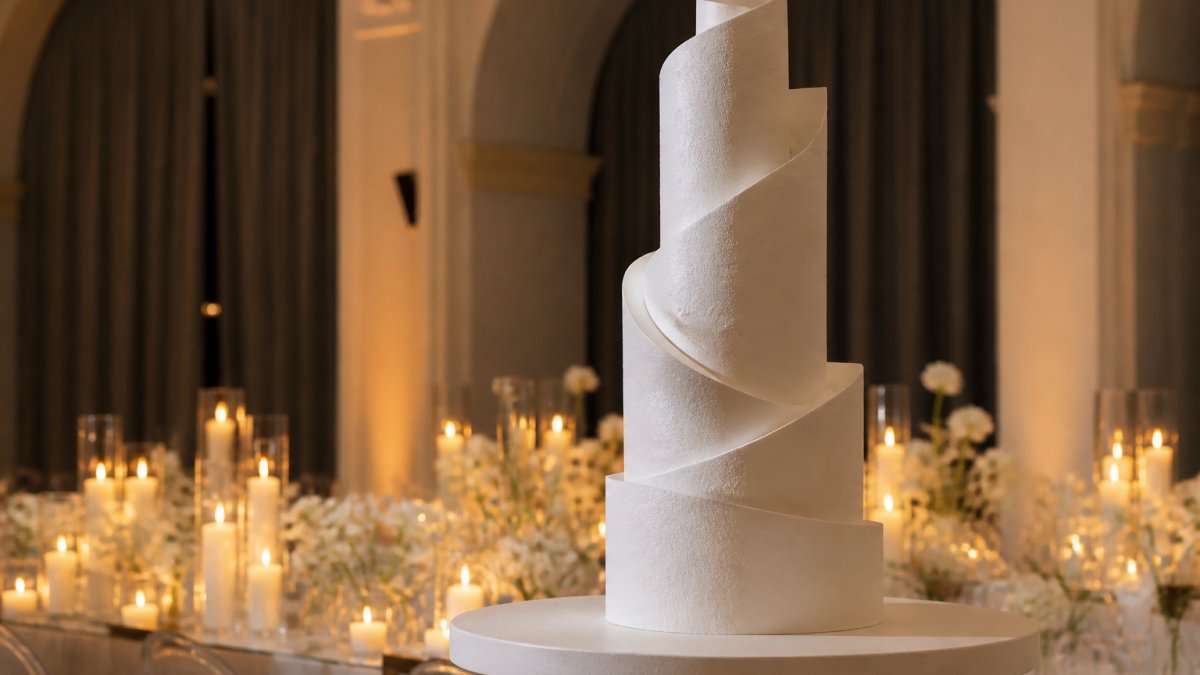
Three forms dominate:
- Stacked towers with deliberate asymmetry, where each tier shifts off-center
- Floating tiers separated by hidden supports for a gravity-defying look
- Oversized single statements that trade height for width and sheer presence
What most guides skip is the engineering. A leaning tier is a structural decision made before the first layer is baked: curves need denser cake and careful support, and floating tiers need internal doweling planned to the inch.
Stacked, Floating, and Oversized Statement Cakes
Each statement size suits a different room. A stacked cake works best with high ceilings and a clear sightline from the entrance; floating tiers suit modern, minimalist spaces where the cake is the only ornament; oversized single-tier cakes fit intimate weddings where every finish is visible. Floating and oversized designs cost more to build and transport because they need custom internal structure and careful handling, but they photograph beautifully, which is why so many 2026 couples make them the focal point.
Textured Frosting, Cakescaping, and Vintage Lambeth Piping
Texture is doing the heavy lifting in 2026: frosting meant to be touched with the eyes, swirled, combed, sculpted, or piped into relief. But texture is a family of finishes with different labor profiles, durability, and best uses. Here is how the three biggest texture trends work.
Textured Frosting: Combed, Swirled, and Sculpted
Textured frosting is built with tools, not just a spatula, a comb, palette knife, silicone texture mat, or hand-carved approach creates ridges, waves, and relief.
- Combed and ridged finishes are made by dragging a notched tool through buttercream while it is still workable. The result reads as fabric or plaster and catches light in a way smooth frosting cannot.
- Swirled and wave finishes use a palette knife or spoon to build soft peaks and folds. They suit romantic, garden, and coastal settings and tend to be more forgiving of small imperfections than sharp geometry.
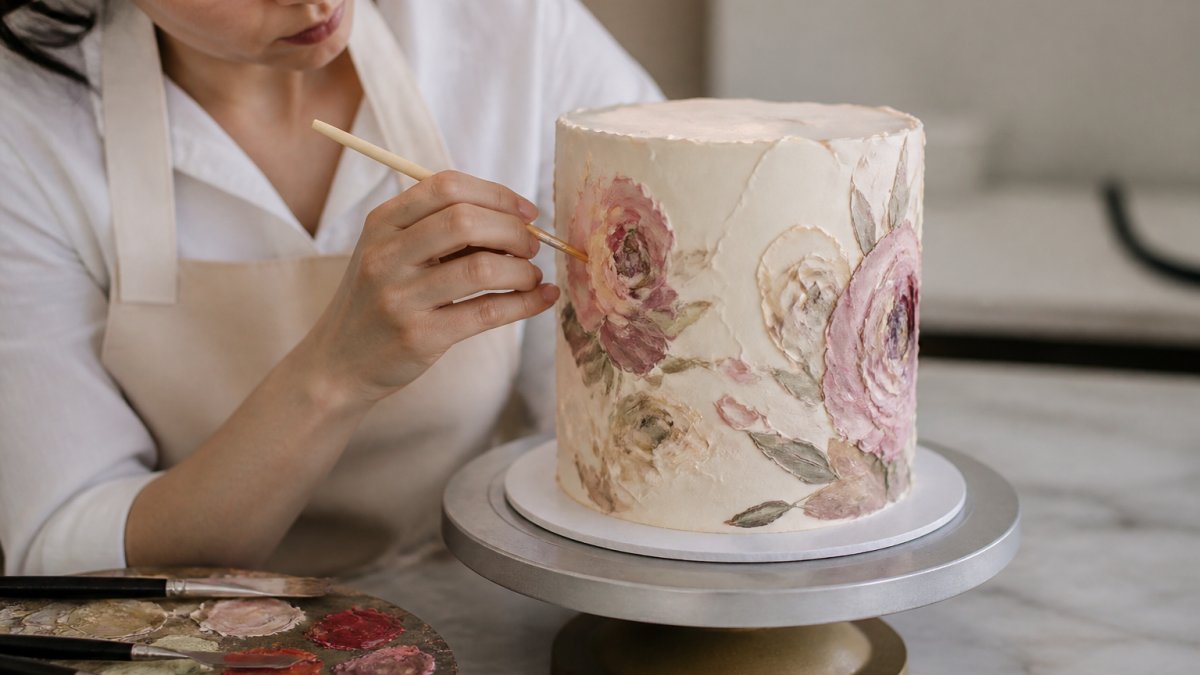
- Sculpted relief is the most labor-intensive: the designer builds up frosting or fondant and carves it back to create dimension. High-relief finishes change with the lighting, which is why they photograph so well.
A practical trade-off: the more texture, the more surface area for dust, heat, and handling to affect. Textured buttercream is beautiful but less heat-tolerant than a smooth fondant finish, so an outdoor summer reception may call for a firmer finish or a shaded display.
Cakescaping: Building a Landscape on the Cake
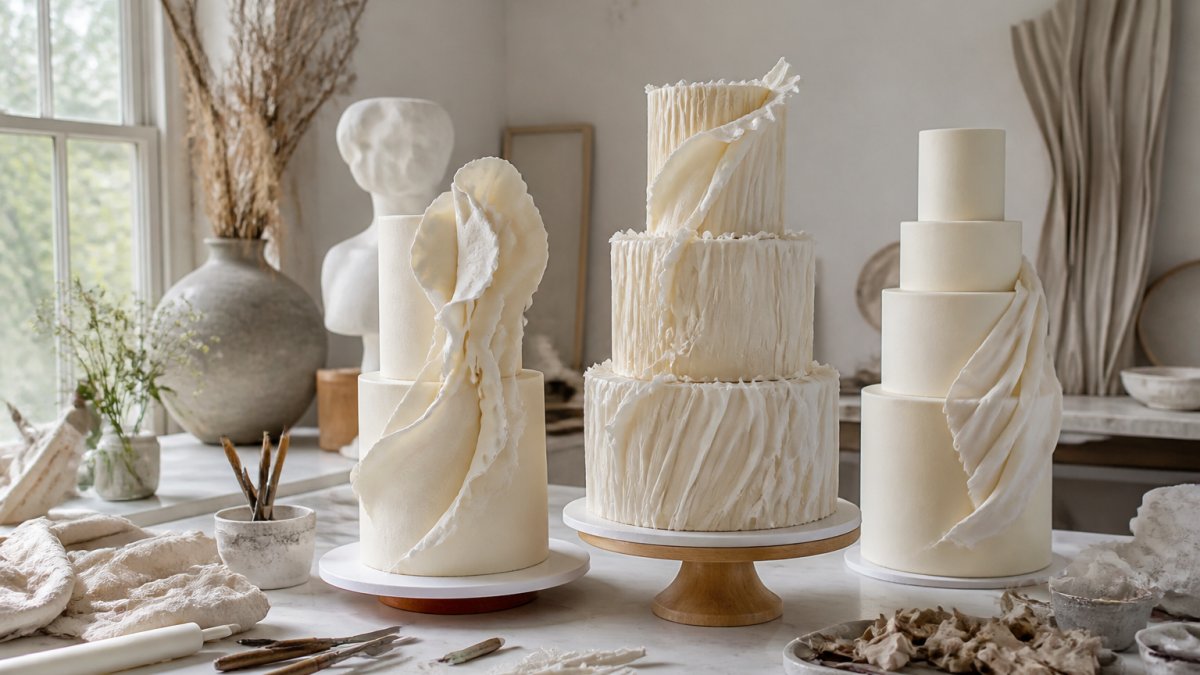
Cakescaping is building a landscape on the cake itself: draped icing mimics fabric folds, and high-relief finishes add dimension that changes with the lighting. The cake becomes a small sculpture you can eat.
In practice, cakescaping usually combines three moves:
- Draped or folded icing that imitates silk, linen, or tulle, often built over a structured base so the folds hold.
- Relief and bas-relief elements that sit proud of the surface, adding shadow and depth.
- Botanical and architectural accents, sugar flowers, leaves, or geometric forms, placed to follow the form rather than sit on top of it.
The planning lesson mirrors florals: cakescaping has to be designed with the tier shapes from the start. A draped fold that fights the curve of a tier looks accidental; one that follows it looks intentional.
Vintage Lambeth Piping: Why It Costs What It Costs
Then there is the return of Lambeth piping, the ornate, hand-piped vintage style with intricate borders, ruffles, and scrollwork covering the surface in dense detail.
Lambeth piping is slow, skilled handwork that cannot be rushed or replicated by a machine, and it shows in the price. A fully piped tier can take many hours of handwork, and pattern density drives both cost and lead time.
How to Choose Between Them
The three trends suit different priorities:
- Choose textured frosting for tactile, modern surface interest that photographs well without dense decoration.
- Choose cakescaping for a sculptural, art-led centerpiece planned around structure and form.
- Choose Lambeth piping for vintage romance and dense detail, with the labor and lead time it requires.
Many 2026 cakes combine two of the three, but each addition adds hours. The clearest brief names the one texture technique you love most and lets the rest stay quiet.
Minimalist Wedding Cake Ideas That Still Feel Sculptural
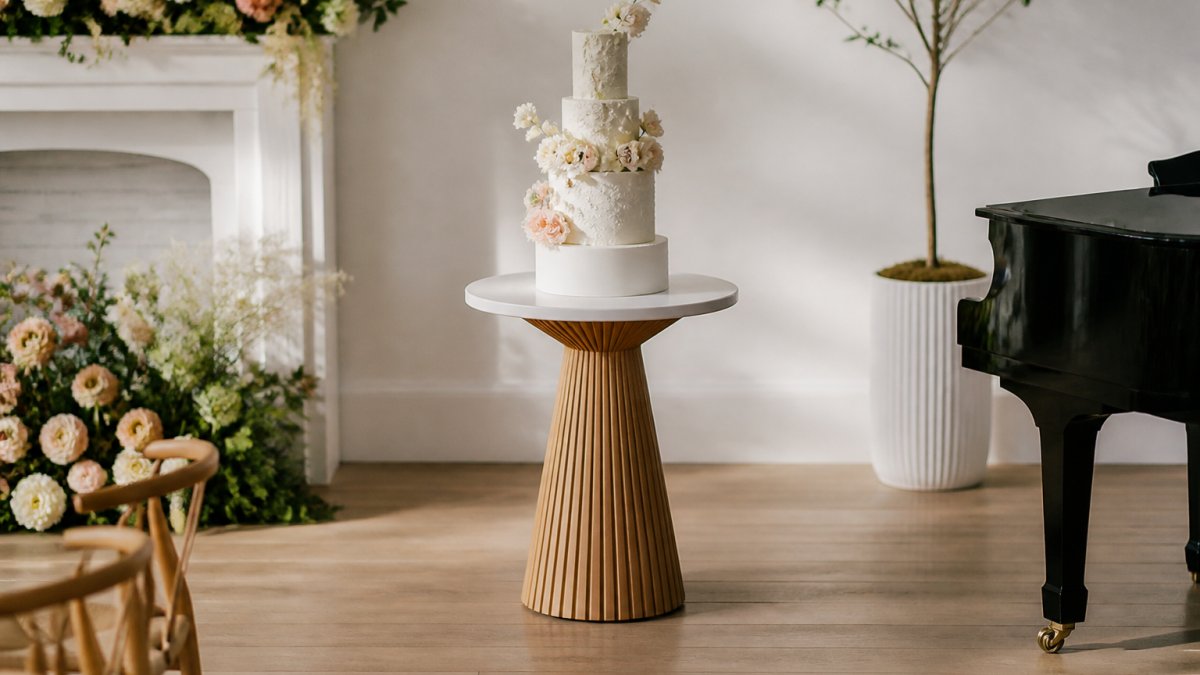
Minimalist wedding cake ideas prove restraint can be dramatic: a single smooth tier with one clean curve can hold a room better than a tower of decoration.
The trick is proportion and finish. Minimalist sculptural cakes rely on:
- Perfect geometry, where every edge is crisp and intentional
- One strong gesture, like a single fold, cut, or sweep of frosting
- A matte or satin finish that shows form without distracting shine
This style suits couples who want a modern wedding cake design that will not date. It also tends to be more forgiving on budget than heavy piped work, because the labor goes into precision rather than volume.
Floral Wedding Cake Designs: Sugar Flowers and Botanical Detail
Floral wedding cake designs remain the heart of the year, but couples now want botanicals that look gathered, not manufactured.
At Violet Cake Co, our signature floral-inspired aesthetic grew from fine-art training and shapes how we approach every stem and petal.
A common mistake is treating florals as an afterthought. Flower placement should be planned with the tier shapes from the start, so the botanicals follow the form instead of fighting it.
Bold Color Palettes and Expressive 80s-Inspired Nostalgia
Color is back, and it is loud. The 2026 palette leans into bold colors and expressive style, often with an 80s-inspired nostalgic edge.
What this looks like in practice:
- Saturated jewel tones against white or cream
- Color-blocked tiers with sharp contrast
- Playful, hand-painted detail and retro piping patterns
The 80s revival brings ornate decoration back into fashion: ruffles, swags, and graphic piping in colors your grandmother's cake never dared.
Our advice: pick one bold move and let it lead. A single saturated tier or one dramatic color sweep reads as confident.
Custom Wedding Cake Design: Structure, Budget, and Transport
Custom wedding cake design is where the trend meets reality. A sculptural cake is a small building project that must survive a car ride, a venue loading dock, and a four-hour reception in a warm room. This section covers what happens between the sketch and the slice.
How Sculptural Cakes Are Actually Engineered
Every unusual form starts with a support plan, not a flavor: the internal architecture is decided before the first tier is baked.
- Central dowels and tier plates. Stacked and offset tiers rely on food-safe dowels driven through each tier into a base plate. A leaning or asymmetric stack needs the dowel pattern offset to match the center of gravity, not the visual center of the cake.
- Denser cake for curved and carved forms. Curved and carved shapes are usually built from a denser sponge or firmer butter cake so the crumb holds its shape under fondant or a sculpted finish. A light, airy sponge can slump in a carved form.
- Hidden supports for floating tiers. A floating tier sits on a concealed internal structure, often a central column or hidden acrylic or food-safe support, that carries the weight above it. Ask how it is anchored and what happens if the room warms up.
Transport, Venue Access, and Setup
A tall or wide cake is a logistics problem before it is a dessert, the same questions a caterer asks about any large delivery.
- Assemble on site when possible. Delicate finishes, tall stacks, and floating tiers are often delivered in sections and assembled at the venue, so the designer needs access to the reception room hours before guests arrive, not minutes.
- Confirm the path, not just the address. Ask about loading docks, freight elevators, stair width, door clearances, and whether the cake table is on the same level as the delivery entrance. A cake that fits the table may not fit the hallway.
- Plan for heat and humidity. Buttercream, fresh florals, and delicate sugar work are sensitive to warm rooms and outdoor receptions. A cake displayed outdoors in summer needs a shaded, stable spot and a design that tolerates it, or a plan to move it indoors before the ceremony.
How to Brief a Designer and Translate a Concept
The most useful skill a couple can bring to a sculptural cake is a clear brief. A good designer will translate references into a workable design, but only if the references are specific.
- Bring references for form, not just mood. A photo of a curved, offset cake tells the designer more than a general "modern" mood board. Separate your references into form, texture, color, and floral.
- State the constraints up front. Guest count, venue, reception time, indoor or outdoor display, dietary needs, and budget range all shape the design before the first sketch.
- Ask for a structure sketch, not only a beauty sketch. A designer who can show you where the supports go and how the cake will be assembled is telling you whether the design is buildable.
- Lock the flower count and finish early. Sugar florals and hand-piped detail are the two line items most likely to move the price after design approval.
- Confirm the delivery and setup window in writing. The venue, caterer, and designer should agree on access time and who is responsible for the table.
What Drives Cost and How to Plan for Delivery
Cost in custom cake work tracks labor, structure, and logistics. Studios quote each cake individually because the variables compound: a taller cake needs more structure, a detailed finish needs more hours, and a farther venue needs more delivery time.
| Cost Driver | What It Covers | How to Plan |
|---|---|---|
| Hand-piped detail | Hours of skilled Lambeth or relief work | Book early; budget it as its own line |
| Structural build | Internal supports, dense cake, custom tiers | Approve the structure with the sketch |
| Sugar florals | Hand-shaped blooms and botanicals | Set a flower count before design lock |
| Delivery and setup | Careful transport and on-site assembly | Confirm venue access and timing early |
| Serving count | Tier number and portion size | Match tiers to guest count, not looks alone |
A practical way to plan is to decide which two drivers matter most to you, form, florals, finish, or scale, and let the others stay simple. A cake with one dramatic structural gesture and a restrained finish often costs less than a modest shape with dense hand-piped coverage, because labor follows detail, not drama.
Conclusion
The hardest part of a sculptural cake is not choosing a look. It is finding a designer who can build the form, deliver it intact, and make it taste worth the investment, the balance we build our studio around.
Violet Cake Co brings fine-art training, hand-crafted sugar florals, and flavor-first recipes to every bespoke design. We plan structure and delivery alongside the sketch, so the cake you approve is the cake your guests see and taste.
Frequently Asked Questions
What is a sculptural wedding cake?
A sculptural wedding cake treats the dessert as a three-dimensional art object rather than a traditional tiered round. Designers use asymmetric tiers, curved and floating forms, high-relief textured frosting, and hand-piped detailing to create visual movement. The result is a centerpiece that photographs like a sculpture. Many sculptural cakes still serve a crowd of 100 or more, and structural supports are hidden inside so the cake stays stable through the reception.
How much does a custom sculptural wedding cake cost?
Pricing depends on tier count, the complexity of sculptural forms, hand-crafted sugar florals, delivery distance, and venue logistics. Because every design is bespoke, quotes vary widely across studios. Ask for an itemized quote that separates design labor, structural work, florals, and delivery so you can compare fairly. Violet Cake Co provides pricing information on its website, and a consultation is the fastest way to get an accurate figure for your design.
How do you keep a sculptural wedding cake stable?
Stability comes from internal structure, not frosting. Designers use dowels, central support columns, and sometimes hidden armatures to carry the weight of floating or oversized tiers. Delivery matters just as much: cakes are boxed, chilled, and assembled on site by the studio's team. Ask your designer how the cake will be transported and whether they handle setup at the venue. A studio that manages delivery and assembly itself removes most of the risk.
Are minimalist wedding cakes still in style for 2026?
Yes. Minimalist wedding cake ideas remain strong in 2026, but the definition has shifted. Instead of plain white tiers, minimalist cakes now lean on one dramatic gesture: a single curved tier, a smooth monochrome finish with one sculptural fold, or a restrained cluster of sugar flowers. Clean lines and negative space do the work. This style suits venues with strong architecture, where a quieter cake lets the room lead.